



Over one-fifth of retail sales are transacted through ecommerce, occupying a growing share of global trade.
International shipping is increasingly essential for ecommerce brands with ambitious goals for growth. When deeper market penetration hits the point of diminishing returns, expansion is often the most cost-effective lever to fuel your business growth.
This guide covers the basics of building a cross-border delivery network for a direct-to-consumer (D2C) ecommerce brand, including:
- Navigating international regulations
- Selecting the right markets and products
- Common costs and customs requirements
- Key logistical concerns before you ship
Whether you’re new to global trade or looking to improve your international reach, you’ll learn the fundamentals of planning a cross-border expansion.
The Pros and Cons of Tapping Into Global Trade
For some ecommerce leaders, international shipping is an obvious next move. For others, it feels like more complexity than it’s worth.
The reality sits somewhere in between.
Expanding globally is one of the most effective ways to unlock new growth once a brand has saturated its domestic market. Without it, many brands hit a ceiling.
At this plateau, brands mainly have two opportunities for jump-starting new growth:
- Offer more products
- Engage other markets
Since product development is costly in time, money, and labor, shipping to other markets is often the more cost-effective solution. (In turn, additional markets improve the earning potential of new products.)
That being said, international logistics is no walk in the park.
Even for established brands with lean supply chains, crossing domestic borders introduces new costs, regulations, and compliance requirements before you can sell a single product.
For that reason, it’s advisable to partner with an international shipping and logistics partner to simplify the process.

How to Go from Domestic Ecommerce to International Shipping
Venturing into foreign markets warrants detailed preparations. Before committing to a direction, consider the following:
Market Selection
Choosing the right international market requires even more research and analysis than expanding in-country.
The simplest starting point is your own web traffic. Note the countries with the highest number of users visiting your product pages.
Consider the culture of each prospective market. It’s easier to branch into regions that share a language and have comparable consumer profiles.
Narrow your prospects to a shortlist of top contenders, then evaluate their competitive landscapes. Specifically, you’re looking for market gaps in the shape of the niche you currently occupy.
For U.S.-based companies, common choices include:
- Canada (CA): A good place to start is with your neighbor to the north, given its proximity and cultural similarities.
- United Kingdom (UK): The UK is another easy-to-bridge market with a sizable customer base.
- European Union (EU): The EU offers a diverse range of opportunities, with access to 27 countries through a single customs union.
- Australia (AU): Another majority English-speaking market with a large population that enjoys American products.
Product Selection
Choosing the right products to offer across borders is another key decision in successful cross-border expansion; certain parcels are better suited to international shipping.
Lightweight and compact items are generally more cost-effective to ship, improving margins and enabling competitive pricing. Products that are unique or hard to find in the target market are especially lucrative.
Commodities that are widely recognized and simple to use (e.g., apparel, cosmetics) are also favorable, especially when navigating language barriers.

Regulations and Fees
Understanding country-specific customs practices is critical to ensuring compliance and, therefore, your success. Failure can result in costly fines, shipment delays, and even legal penalties.
Research the import rules for your target markets, and check for restrictions or packaging requirements for the products you plan to sell.
Be sure to validate taxes, duties, tariffs, and any fees associated with doing business in that country. Some places are more expensive to sell in than others, which will impact your pricing strategy and overall market viability.
Key Logistical Considerations Before Shipping Internationally
After scoping your target market, choosing appropriate products, and estimating the cost of doing business, you’re ready for the next step: shipping logistics.
Successful international ecommerce shipping requires clear cost structures, reliable delivery networks, and the flexibility to adapt to disruptions in real time.
Before you commit to launching, check the following to validate your model’s sustainability:
Calculating Landed Costs
Understanding the landed cost of your sales is essential for assessing your business’s viability in that market and setting clear expectations with shoppers.
Landed cost is the comprehensive sum of costs to the consumer—their total payment amount—including the:
- Product price
- Shipping fees
- Duties and taxes
- Handling charges
A key decision in your international shipping plan is whether to use delivered duty paid (DDP) or delivered duty unpaid (DDU) terms. Each method has pros and cons, but DDP is typically the simpler option for a smooth delivery.
In both cases, presenting an accurate landed cost during checkout shows consumers the true price of their purchase. Clearly communicating the landed cost to your international customers is a baseline requirement for earning their trust.
This transparency is especially important for international ecommerce shipping, where unclear fees are a leading cause of cart abandonment (followed by slow delivery times).
Transit and Delivery Times
Delivery speed is just as important, if not more, when selling abroad. International transit times are subject to more variables than in-country operations, but customers still expect reliable delivery windows.
Balancing speed and cost-efficiency is more complex at an international scale, but ecommerce businesses have several options at their disposal:
- Postal services: The lowest cost and the longest transit time.
- Express carriers: Faster deliveries for a higher price.
- Hybrid logistics: Networks that optimize transit routes for speed and cost-efficiency.
Because deliveries are critical to ecommerce conversions and repeat purchases, many brands partner with shipping and logistics service providers that specialize in their industry.
Returns and Reverse Logistics
Returns are a normal part of ecommerce, but they become significantly more complicated when crossing borders. Without clear reverse logistics, return shipping costs can quickly erode your margins.
Solutions may include using return hubs, consolidating return shipments, or partnering with a service provider that manages return shipping. In some cases, it’s more cost-effective to provide a refund and let the customer keep or dispose of the item.
Brands should also plan how to handle duties and taxes on returns. In some cases, these costs are recoverable through duty drawback programs and other regulatory mechanisms.
A well-planned returns strategy protects margins and maintains a positive customer experience.
Customs Documentation and Classification
Every cross-border shipment must pass through customs, the ultimate bottleneck. Incomplete, missing, or incorrect paperwork is the most commonly cited cause of delays.
You can minimize friction by mastering the art of documentation. The first step is to familiarize yourself with the Harmonized System (HS), a global classification code used by customs authorities to determine applicable duty rates. Using the correct HS code for your merchandise reduces the risk of customs holds.
Your shipping invoices must also include detailed product descriptions and declared values. Vague descriptions can trigger inspections or delays for clarification.
Additionally, many shipments require country-of-origin declarations, which identify where the product was manufactured. This information helps determine eligibility for trade agreements or preferential tariff rates.
Ecommerce brands expanding into international shipping should maintain consistent and accurate documentation to avoid delays, unexpected costs, and negative customer experiences.
Make International Ecommerce Shipping Simple with Passport
Venturing into foreign markets may be complex, but it doesn’t have to be hard. As a global ecommerce solutions provider, Passport collaborates with DTC brands to execute their expansion strategy.
Our end-to-end solution covers everything from storefronts to deliveries, allowing you to deliver a seamless shopping journey for your international buyers.
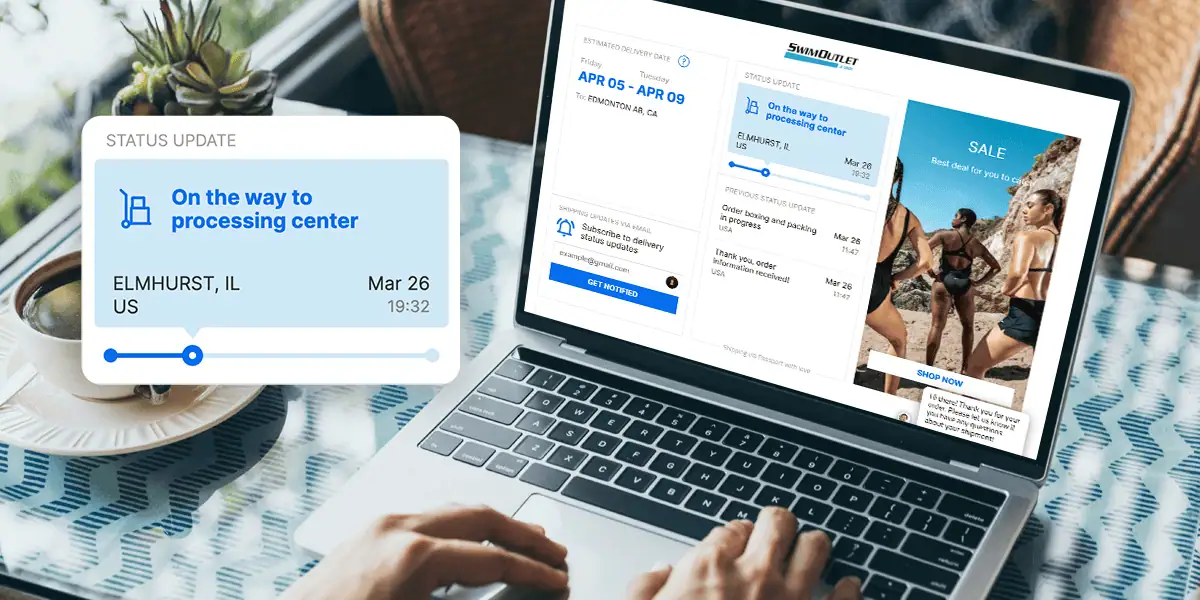
Passport solutions integrate directly with ecommerce platforms to communicate shipping costs and tracking updates to your customers.
Plus, in-house customs and trade compliance experts are available to guide you through the intricacies of international trade, ensuring your products clear customs smoothly.
Offering global ecommerce shipping has never been easier and knowing where to focus next is just as important. Get your International Growth Scorecard to see if your brand is ready to scale globally and uncover the markets and optimizations that can drive your next phase of growth
Or, if you’re ready to take the next step, connect with our team to see how Passport can support your global strategy.

The Ecommerce Quick-Start Guide to International Shipping
- Weigh the pros and cons of going international: Evaluate whether you’re organized and ready to grow.
- Plan your expansion carefully: Choose markets with similar consumer profiles, select your products strategically, and weigh the regulatory costs.
- Check for logistical viability: Evaluate landed costs, delivery times, reverse logistics, and customs practices.
- Partner with a global shipping and logistics expert in your industry.
International Ecommerce Shipping FAQs
Cross-border shipping is tricky. Find expert answers to the most common questions.
How does international shipping work for ecommerce?
International shipping involves transporting orders across borders from storage to doorstep. Order fulfillment is accomplished through transit providers, customs clearance, and last-mile delivery networks. Orders are exported from the origin country, processed through customs in the destination market, and delivered by a local last-mile carrier.
How much does international shipping cost for ecommerce?
The cost of shipping internationally depends on the destination country’s customs practices and taxes, in addition to standard price factors (distance, package weight, delivery speed, etc.). Last-mile delivery costs are another key variable, accounting for a growing share of total shipping expenses.
What documents are required for international shipping?
Most international shipments require a commercial invoice, detailed product descriptions, Harmonized System (HS) codes, and country-of-origin declarations. These documents allow customs authorities to determine duties, taxes, and regulations before allowing your goods into the country.
Who pays duties and taxes on international orders?
Duties and taxes can be paid by the merchant or customer, depending on the shipping method. With delivered duty paid (DDP), duties and taxes are prepaid at checkout and managed by the merchant, creating a smoother delivery experience for the customer. Alternatively, delivered duty unpaid (DDU) requires the customer to pay them upon delivery.
How long does international shipping take?
International shipping times vary based on the destination, customs processing, and shipping service. Economy options may take weeks, while express services can often deliver in days.
What is the best international shipping company for ecommerce?
The best shipping provider depends on your product and business priorities. For example, Passport is best for direct-to-consumer ecommerce brands shipping small parcels, such as cosmetics, apparel, and health supplements.
Which ecommerce platforms are best for international shipping?
Leading platforms like Shopify, TikTok Shop, and Amazon support international shipping through integrations with logistics providers and shipping software. These platforms make it simple for merchants to configure shipping rates, taxes, and checkout experiences for international customers.
What items cannot be shipped internationally?
Certain goods are restricted or prohibited from international shipping depending on the destination country. Common examples include hazardous materials, flammable products, counterfeit goods, and products that violate regulations in the destination country.
How do I compare international shipping companies?
Important features to review include:
- Customs support
- Pricing structures
- Average transit times
- Destination coverage
- Tracking capabilities
- In-house expertise
- Customer service
Providers with established networks in your home market and countries of interest can enable fast, scalable growth.