




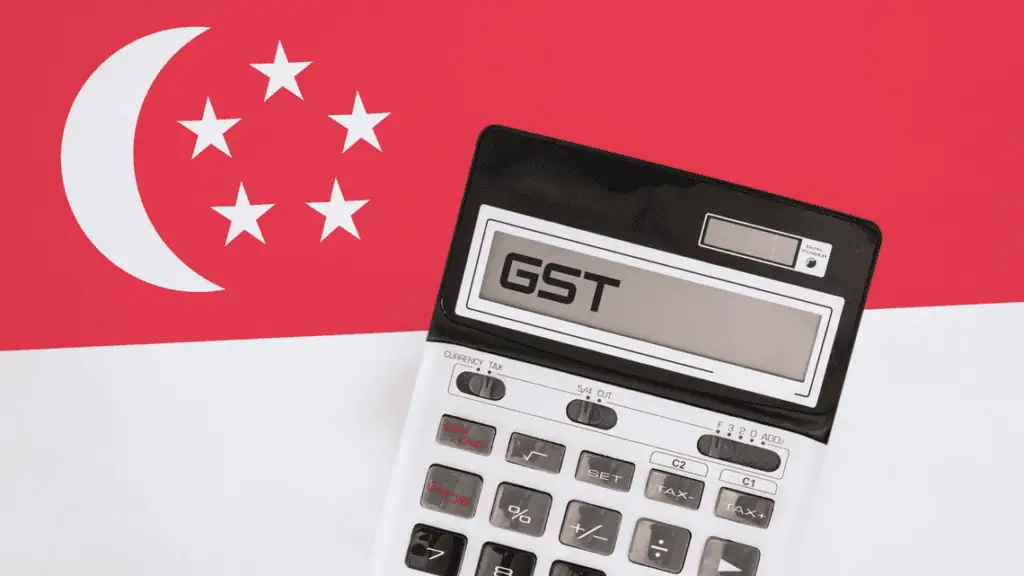
Singapore’s ecommerce market is growing rapidly, but so are its tax requirements. For US brands selling into Singapore, understanding Singapore GST for ecommerce is essential to staying compliant and protecting margins.
With the expansion of the Overseas Vendor Registration (OVR) regime, foreign sellers are now responsible for collecting and remitting GST in many cases—especially for low-value goods.
In this guide, we’ll explain the essentials of Singapore GST for direct-to-consumer brands, including registration, compliance, and solutions for facilitating a smooth and successful expansion.
Key Highlights:
- Singapore has a standard GST rate of 9%.
- The low-value goods (LVG) threshold in Singapore is SGD $400 (~$315 USD). For GST-registered overseas sellers, GST may still apply at checkout on qualifying low-value goods shipments valued at or below this amount.
- GST registration is required when a merchant makes B2C supplies of remote services and/or low-value goods to customers in Singapore exceeding SGD $100,000 within a 12-month period and has more than $1M SGD in global annual turnover.Once registered, businesses are required to collect and remit the 9% GST on B2C shipments of low-value goods to Singapore.
- For orders over the $400 SGD de minimis, duty and tax will be collected during the customs clearance process.
Note: Exchange rate conversion is approximate and based on rates available as of May 8, 2026. For the latest exchange rates, please refer to a trusted currency converter.
Understanding Singapore GST
Singapore GST (Goods and Services Tax) is a 9% consumption tax applied to most goods and services consumed in Singapore. For ecommerce businesses, GST applies differently depending on: Where the seller is located, the value of the goods sold and whether the business meets GST registration thresholds.
For US ecommerce brands, this means sales to consumers in Singapore may be subject to GST which can impact your pricing. Since this tax is ultimately paid by end consumers, it’s crucial for merchants to adjust their website checkout systems to comply with regulations, ensuring accurate application of GST on eligible transactions.
How to Calculate Singapore GST for Ecommerce Orders
To calculate GST:
- Start with the product price
- Add shipping costs
- Add insurance (if applicable)
→ This gives you the CIF value (Cost, Insurance, Freight) - Add any customs duties (if applicable)
- Apply the 9% GST rate
Formula to Calculate Singapore GST
GST = (CIF value + duties) × 9%
Tax Rules & Regulations in Singapore
Low-Value Goods GST in Singapore (≤ SGD $400)
Singapore has a low-value goods (LVG) threshold of $400 SGD (~$315 USD). Qualifying low-value goods are goods valued at or below SGD $400, located outside Singapore at the point of sale, shipped by air or post, and generally non-dutiable.
For GST-registered overseas sellers, the 9% GST is collected at checkout on qualifying low-value goods shipments. Duty and tax will be collected during the customs clearance process for orders over the SGD $400 LVG threshold. It’s important to know that the de minimis amount is calculated based on the CIF value of the shipment.
Singapore GST Registration Threshold for Foreign Sellers
The registration threshold for GST in Singapore has two components, a local turnover and a global turnover. US-based businesses are required to register for GST if:
(1) their B2C supplies of remote services and/or low-value goods to customers in Singapore exceed $100,000 SGD (~$78,938.28) within any given 12-month period and
(2) their global sales exceed $1M SGD.
High-Value Goods and Import GST (> SGD $400)
Once registered, brands must charge customers in Singapore the 9% GST at checkout for any orders under $400 SGD moving forward and file periodic returns with the Inland Revenue Authority of Singapore (IRAS). Note that for GST-registered businesses, shipments over $400 SGD will still have GST collected on import. There is no need to report taxes on these transactions as your carrier or customs broker will continue to manage this for you.
Merchants who remain under the selling threshold do not need to register for a local tax ID or collect GST at checkout for orders qualifying low-value goods shipments under $400 SGD.
Low-Value vs High-Value Goods: GST Comparison Table
Note: DDP (Delivered Duty Paid) includes GST and duties at checkout, creating a seamless customer experience, while DDU (Delivered Duty Unpaid) requires customers to pay taxes at delivery, often causing friction and lower conversion rates. Learn more about the differences in our guide to DDP vs DDU for global ecommerce brands.
Ecommerce Compliance Options for Singapore GST
When shipping to Singapore, understanding and fulfilling the obligation to pay GST is crucial for both legal compliance and ensuring transparent pricing for customers. To stay compliant when selling to Singapore, consider tracking global and Singapore revenue thresholds, automate GST calculation at checkout, ensure transparent landed-cost pricing and maintain accurate tax reporting and filings.
If your brand has crossed the registration threshold, here are your options to become compliant:
- Register for Singapore GST – IRAS offers a simplified tax registration program for overseas companies that want to apply for a local tax ID and file their own GST returns. Keep in mind you’ll also need to update your checkout process to collect the 9% GST from consumers.
- Enroll in the Passport Seller of Record® (SOR)Program – The Seller of Record program allows qualifying ecommerce brands to leverage Passport’s infrastructure to support Singapore GST collection, filing, and remittance obligations for eligible low-value goods shipments, helping reduce the operational burden of overseas GST compliance.
Here at Passport®, we understand the intricacies that come with international shipping, especially regarding import tax regulations. Our Seller of Record solution is designed to give ecommerce brands a simpler way to manage Singapore GST compliance for qualifying low-value goods shipments, with a streamlined onboarding process and support for GST collection, filing, and remittance obligations.I
If you’re interested in Passport’s Seller of Record® (SOR)program, reach out to our team here to get started.

Authored by Thomas Taggart
Head of Global Trade | Passport
Thomas Taggart is a cross-border commerce leader with more than 20 years of experience in international shipping and regulatory affairs. As the Head of Global Trade, Thomas helps ecommerce brands go global by simplifying international trade, tax, and product compliance issues. Prior to Passport, he brought international shipping solutions to market through multiple roles in UPS’s product development organization.
Frequently Asked Questions
What is the current GST rate in Singapore?
The current GST rate in Singapore is 9%, effective January 2024. This rate applies to most goods and services, including ecommerce sales and imports.
What is the Singapore GST registration threshold for foreign sellers?
Foreign ecommerce sellers must register for GST under the Overseas Vendor Registration (OVR) regime if they exceed:
- SGD $1 million in global annual revenue, and
- SGD $100,000 in Singapore sales (over 12 months)
Once both thresholds are met, registration is mandatory.
Do I need to register for GST before selling to Singapore?
No, you don’t need to register for GST before selling to Singapore unless you exceed the registration thresholds.
However, once your business surpasses:
- SGD $1 million in global revenue, and
- SGD $100,000 in Singapore sales (12 months)
GST registration becomes mandatory, and you must begin collecting and remitting GST.
How does Singapore GST work for ecommerce?
Singapore GST is a 9% consumption tax applied to goods sold to customers in Singapore.
- For low-value goods (≤ SGD $400): GST is collected at checkout by the seller
- For high-value goods (> SGD $400): GST is collected at import by customs or carriers
Do US ecommerce companies need to charge GST in Singapore?
Yes—US ecommerce companies must charge GST if they are registered under Singapore’s OVR regime.
Once registered, businesses must collect and remit 9% GST on all applicable low-value goods sold to Singapore consumers.
Who pays GST in Singapore?
GST is ultimately paid by the end consumer, but ecommerce businesses are responsible for collecting and remitting the tax if they are GST-registered.
Is Singapore GST charged at checkout or delivery?
Singapore GST can be charged at either checkout or delivery, depending on the value of the goods:
- Low-value goods (≤ SGD $400): GST is collected at checkout by the seller
- High-value goods (> SGD $400): GST is collected at delivery by customs or carriers
Many ecommerce brands prefer collecting GST at checkout to improve transparency and conversion rates.
What are low-value goods in Singapore GST?
Low-value goods are items valued at SGD $400 or less.
For these goods, GST must be collected at checkout by the seller if the seller is GST-registered.
How is Singapore GST calculated?
Singapore GST is calculated by adding the product price, shipping, and insurance (CIF value), plus any duties, then applying the 9% GST rate.
Formula:
GST = (CIF + duties) × 9%
Do customers pay GST on delivery in Singapore?
Customers may pay GST at delivery if:
- The order value exceeds SGD $400, or
- The shipment is handled under a DDU (Delivered Duty Unpaid) model
This can lead to additional fees and a less predictable delivery experience.
What is the difference between GST and VAT in Singapore?
Singapore uses GST (Goods and Services Tax), which functions similarly to VAT (Value-Added Tax) in other countries. Both are consumption taxes applied to goods and services.
Is GST calculated using CIF or FOB in Singapore?
Singapore uses the CIF (Cost, Insurance, Freight) method to calculate GST and duties.
This means taxes are based on the total value of the product, shipping, and insurance.