




VAT vs. GST for US e-commerce brands: when each applies, who’s responsible for collecting it, and how to avoid double taxation on international orders.
Thomas Taggart
US Merchants Shipping to Canada: How CARM Impacts You
Discover how CARM, Canada’s customs regulation system, impacts US merchants. Learn key requirements and if your business needs to register.
Import Tariff Rates by Country: Key Markets for U.S. Ecommerce Brands
Compare import tariff rates by country and learn how duties, VAT, GST, trade agreements, and landed costs affect U.S. ecommerce brands.
De Minimis Tariff Exemption Explained: What Ecommerce Brands Need to Know
Learn how the de minimis tariff exemption works, why global thresholds are changing in 2026, and what ecommerce brands can do to reduce landed costs and stay compliant.
IOR vs. MOR vs. SOR: Which Global Ecommerce Model Does Your Brand Need?
Compare IOR vs. MOR vs. SOR to understand their roles in customs, payments, VAT/GST compliance, checkout control, and global ecommerce expansion.
Value-Added Tax 101: A Beginner’s Guide to VAT Compliance
Learn how value-added tax (VAT) works, what ecommerce brands need to know about VAT compliance, and best practices for selling internationally.
DDU Shipping: What Delivered Duty Unpaid Really Costs Ecommerce Brands in 2026
DDU shipping may seem simple, but in 2026 it creates new risks for ecommerce brands selling into the EU. Learn how Delivered Duty Unpaid affects customer costs, customs clearance, IOSS data, refused packages, and why many brands are shifting to DDP.
DDP Shipping Terms: What Delivered Duty Paid Means and How It Works for Ecommerce
Learn what DDP shipping means for ecommerce, how Delivered Duty Paid works, who pays duties and taxes, and why DDP matters under new EU import rules.
What Is an Importer of Record (IOR)? A Complete Guide for Ecommerce Brands
Learn what an Importer of Record (IOR) is, why it matters in global ecommerce, and how IOR services help brands manage customs compliance, duties, taxes, and international shipping operations.
EU Import Tariff Rates: What Ecommerce Brands Should Expect When Shipping to Europe
Learn how EU import tariff rates work, what ecommerce brands should expect when shipping to Europe, and how duties, VAT, HS codes, origin, and 2026 reforms affect landed cost.
EU VAT Compliance: What E-Commerce Brands Need to Know for B2C Imports
EU VAT compliance has become more complex as new customs reforms reshape ecommerce imports. Learn how VAT, IOSS, DDP vs. DDU shipping, and the end of the €150 duty-free threshold affect B2C brands selling into Europe—and what you can do to stay compliant while protecting margins.
The EU’s €3 Flat Duty Is Live. Here’s What Counts as Avoidance — and What Doesn’t.
The EU’s July 1 e-commerce customs changes are now in effect. Duty de minimis is gone, the €3 flat duty is live, and Brussels has made clear which workarounds it will treat as avoidance.
Turning Tariffs into Refunds: How Duty Drawback Can Help Ecommerce Brands Navigate U.S. Tariff Volatility
Learn how Duty Drawback helps ecommerce brands offset tariff costs, reclaim cash flow, and stay competitive in today’s U.S. trade climate
EU Customs Changes 2026: An Ongoing Guide for Ecommerce Imports
Understand the latest EU customs changes affecting ecommerce, including IOSS, the €150 de minimis removal, new import fees, and upcoming implementation dates.
The Strategic Advantage of In-Country Enablement for Ecommerce Growth
Discover the benefits of in-country enablement for global brands — from faster delivery and cost savings to new growth opportunities in local marketplaces.
EU Customs Reform 2026: The New Rules Reshaping International Ecommerce
The EU is currently undergoing a monumental shift in its trade and customs policies. Find out what it means for international ecommerce in European markets.
Shipping Cosmetics to the EU and UK
Learn how to navigate the regulations and safely ship cosmetics to the EU and UK with Passport Shipping. Expert advice and real-world experience.
Customs Valuation: How to Accurately Value Products for Customs Clearance
Learn how customs valuation works, which value to declare for ecommerce shipments, how to handle discounts, samples, exchanges, and warranty replacements, and how accurate valuation helps avoid delays, duties issues, and customer surprises.
New Zealand GST Compliance: What US E-Commerce Brands Need to Know
Understand how New Zealand’s GST regulations impact e-commerce. Learn about payment obligations, tax calculations, and compliance strategies for US brands.
Canada NRI Shipping: What DTC Merchants Should Consider
Understand how shipping from the US to Canada as an NRI impacts businesses. Learn about the risks, responsibilities, and an alternative strategy for DTC brands.
Norway VAT Guide for E-Commerce: What US Merchants Need to Know
We break down the essentials of Norway VAT for US e-commerce brands, from important thresholds to payment obligations and registration requirements.
Why Trade Compliance Matters: Staying Ahead in a Global Marketplace
Uncover the significance of trade compliance and how it sets the foundation for successful international ecommerce.
Canadian Tariffs on U.S. Goods: Understanding Import Costs for Ecommerce Brands
Learn how Canadian tariffs on U.S. goods work, how duties and taxes are calculated, and how ecommerce brands can create a smoother cross-border experience for Canadian customers.
IEEPA Tariffs & the Supreme Court: An Ongoing Guide for Importers
Learn what the Supreme Court’s IEEPA tariff decision could mean for importers, including duty impact, refund questions, and next steps.
Canada HST/GST Explained: A Guide for US E-Commerce Brands
Understand the basics of Canada HST/GST in this guide, essential for US e-commerce brands aiming to navigate the Canadian market successfully.
International Ecommerce Taxes: What US Merchants Should Know
Do US companies have to pay VAT or GST? Learn how international ecommerce taxes work, including thresholds, de minimis rules, and how to stay compliant globally.
UK VAT Guide for Ecommerce: Understanding B2C Import Rules
Unlock the UK market for your ecommerce brand with this essential guide. Understand key VAT regulations for B2C imports to ensure a seamless global expansion.
Singapore GST: Navigating Compliance for US Ecommerce Brands
Learn how Singapore GST impacts US ecommerce brands. Understand thresholds, low-value goods rules, and how to stay compliant in 2026.
Australia GST for E-Commerce: What DTC Brands Need to Know
Understand Australia’s GST regulations for e-commerce. Learn who needs to pay, how it’s calculated, and compliance options for DTC brands looking to succeed in this lucrative market.
IEEPA Tariffs Overturned: Why Billions in Refund Claims May Now Be at Stake for Importers
The Supreme Court just invalidated billions in IEEPA tariffs, but recovery isn’t automatic.With CBP’s new CAPE “80-day rule,” timing now determines how fast you get refunded. Follow this roadmap to reclaim your share of an estimated $166 billion.
HS Codes for Shipping Internationally: How to Classify Products for Faster Clearance and Fewer Costly Mistakes
When it comes to international shipping, accurate product classification is essential for smooth and efficient customs clearance.
Reclaiming IEEPA Tariffs: A Practical Guide for U.S. Ecommerce Importers of Record
Learn how U.S. ecommerce importers of record can recover invalidated IEEPA tariffs—step-by-step guidance on eligibility, the 180-day rule, liquidation status, and filing protests or corrections.
Why Transparent Pricing Wins: The Importance of Landed Cost in Global Ecommerce
Explore the pivotal role of landed cost in global ecommerce from calculations and compliance to elevating customer experience and enhancing profitability.
Distance Selling Thresholds: When to Register for VAT
Learn how to navigate distance selling thresholds and determine when VAT registration is required for US ecommerce brands shipping internationally.
Seller of Record (SOR): What It Is & How It Simplifies Ecommerce Tax Compliance
Discover how Passport’s innovative Seller of Record solution simplifies cross-border ecommerce by handling international tax compliance.
DDP vs. DDU: Which Shipping Method Is Best for Ecommerce in 2026?
Guide to DDP vs DDU for ecommerce: who pays duties and taxes, impact on customer experience and ops, and how de minimis changes are driving brands to DDP.
Recovering Duties and Taxes on International Returns: A Guide for U.S. E-Commerce Merchants
Recovering duties and taxes on international returns isn’t automatic—and for U.S. e-commerce merchants, it can significantly impact margins. This guide explains how duty and tax recovery works across Canada, the UK, the EU, and the United States, including key requirements like proof of export, importer of record (IOR) strategy, and data matching. Learn when recovery is possible, when it’s not, and how to structure your cross-border operations to maximize refunds and reduce return costs.
How to Get a CBP ACE Account
Step-by-step guide to getting a CBP ACE account. Learn how importers can verify eligibility, avoid signup delays, and access entry, duty, and liquidation data.
HMRC’s B2B2C Ruling: What Merchants Need to Know About Customs Value
A recent HMRC Advance Valuation Ruling confirms that the relevant sale for customs purposes is the end-customer sale, not the upstream related-party transaction. If your UK import model relies on a lower intercompany transfer price, here is what you need to understand.
Canada’s “Last Sale” Rule: The 2026 Guide for E-commerce Sellers and NRIs
The Canada Border Services Agency (CBSA) is overhauling the Value for Duty Regulations to establish a “Last Sale” mandate, requiring duties to be calculated on the retail price of goods sold to Canadian consumers. The primary goal is to level the playing field for Canadian merchants by closing loopholes that allowed foreign merchants to calculate duties on a lower, upstream transaction value, rather than punishing legitimate domestic brands.
Trump Tariff Talk 2026: Navigating the Greenland Reversal, IEEPA Ruling, and New EU Handling Fees
Navigate the 2026 trade whiplash: Expert insights on the Greenland tariff reversal, IEEPA refund strategy, and new EU handling fees for e-commerce.
The End of U.S. De Minimis for All Countries: What Ecommerce Brands Should Do Now
De minimis is ending for all U.S. imports. Discover how to adjust your fulfillment, pricing, and compliance strategy to stay profitable.
The Shifting Trade Landscape: Considerations for Choosing the Right U.S. Import Model
Learn how UK and EU brands can navigate shifting U.S. trade rules by choosing the right import model—DTC, In-Country, or B2B2C—for cost, speed, and compliance.
Navigating the End of Duty-Free Shipping: De Minimis Reform and Global E-Commerce Strategies
U.S. ends de minimis for China: discover what it means for cross-border ecommerce, customs enforcement, and merchant compliance in 2025.
The End of De Minimis and the Rise of Risky Tariff Dodges
Tariff workarounds are rising—but many are high-risk and illegal. Explore the top schemes brands are being pitched (and why to avoid them).
After De Minimis: Navigating Tariffs and Customs Valuation in a New Era
For foreign ecommerce merchants selling to U.S. customers, the trade landscape has shifted dramatically. Recent U.S....
How Trump’s 2025 Tariffs Impact Ecommerce: What Brands Need to Know & Next Steps to Stay Ahead
Trump’s new U.S. tariffs are shaking up ecommerce. Learn how they affect your brand – and the strategic moves you can make now to keep up in a shifting market.
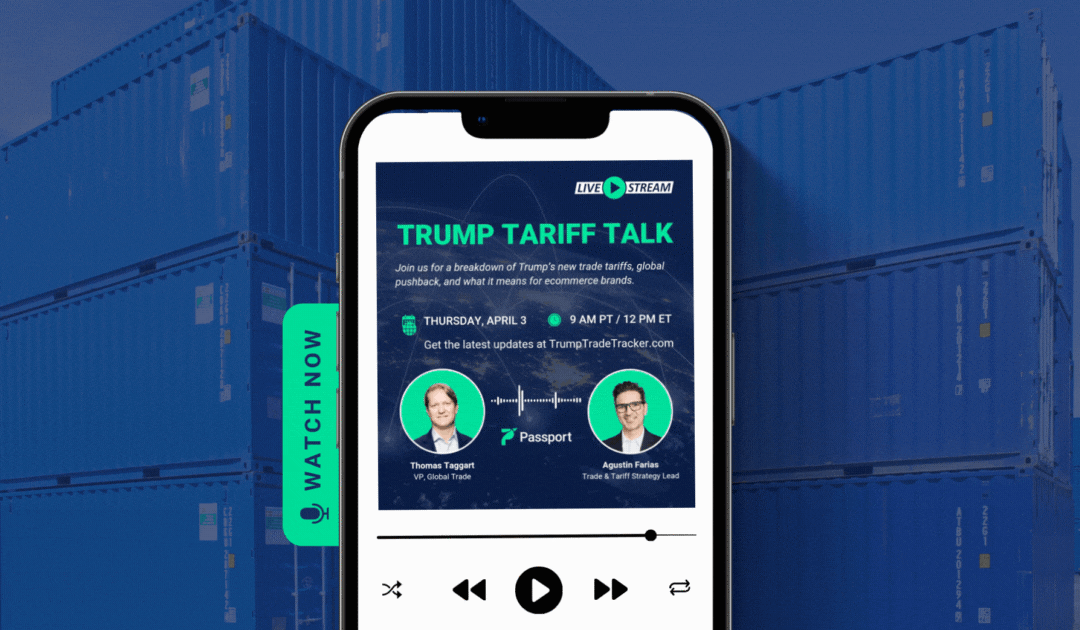
U.S. Trade Policy Updates April 2025: Trump’s Reciprocal Tariffs, De Minimis Changes & What Brands Should Do Next
Trump’s April 2025 trade policy changes are here. Learn how to navigate reciprocal tariffs, the end of de minimis, and rising import costs.
Cross-Border Tax Compliance: Why Ecommerce Brands Are Choosing Seller of Record for Global Expansion
Find out why ecommerce brands are turning to Seller of Record to make cross-border tax compliance easier and scale internationally.
Global Scale, Local Simplicity
Whether you're moving into the U.S., UK, Canada, the EU, or beyond—Passport Global makes it easy to establish your local footprint and win the market.
Ready to go local? Let's talk.