




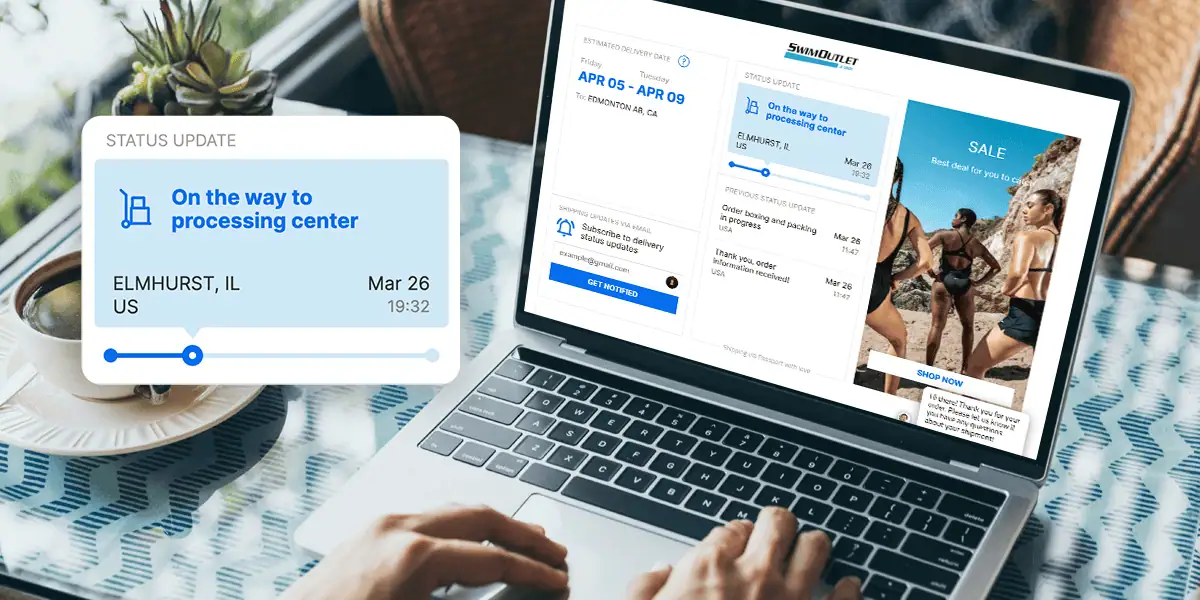

A Seller of Record (SOR) is a third-party partner that becomes the legal seller of your products at the moment of purchase — through a brief subsale — so it can register for, collect, and remit VAT/GST on your behalf in markets that require it. You keep your own payment processor, checkout, and customer data; the SOR only takes on the tax compliance layer. This is the model behind Passport’s own Seller of Record® program, and this guide covers how it works, when it fits, and how it compares to a Merchant of Record (MOR).
Expanding internationally shouldn’t require building a tax team in every market.
But for most ecommerce brands, global growth quickly turns into a compliance challenge: VAT registrations, ongoing filings, audit risk, and constantly changing regulations across regions.
This is where understanding Seller of Record becomes critical.
Instead of managing tax compliance country by country, brands can shift that responsibility to a trusted partner, unlocking faster market entry, lower operational overhead, and reduced risk.
At Passport, we recognize that the transition from domestic shipping to a global footprint involves more than just logistics. It requires a sophisticated understanding of indirect tax liability, customs valuation, and the shifting de minimis landscape.
Seller of Record (SOR): Key Takeaways
- A Seller of Record (SOR) is a third party that takes on international tax compliance (VAT/GST), so ecommerce brands don’t have to manage it themselves.
- You keep control of your checkout, payments, and customer data while the SOR handles tax registration, collection, and filing.
- SOR vs. Merchant of Record (MOR): SOR focuses on tax compliance only, whereas MOR also manages payment processing and customer transactions.
- Ideal for brands expanding globally that want to avoid setting up foreign entities or building in-house tax expertise.
- Helps reduce risk and operational complexity while enabling faster, more flexible entry into new markets.
What Is a Seller of Record in Ecommerce?
A Seller of Record model shifts that responsibility to a trusted partner. Rather than managing tax compliance country by country, brands outsource the collection, reconciliation, and remittance of international taxes to a third-party expert — without sacrificing control over cash flow, store experience, or customer data. The transition from domestic shipping to a global footprint involves more than logistics; it requires navigating indirect tax liability, customs valuation, and the shifting de minimis landscape, which is exactly what an SOR is built to absorb.
Seller of Record vs. Merchant of Record:
Both Seller of Record and Merchant of Record models can help brands manage indirect tax compliance in certain markets. The difference is scope:
- Seller of Record (SOR): focuses primarily on indirect tax compliance while allowing brands to maintain greater control over their payment stack and customer experience.
- Merchant of Record (MOR): typically takes on a broader set of responsibilities, often including payment processing and customer financial interactions, depending on the provider and structure.
Passport supports both approaches, so brands can choose the model that best matches their market strategy, internal resources, and desired level of control.
See the full SOR vs. MOR comparison or Merchant of Record: Essential Insights for the MOR side in full depth.
Using an SOR provides brands with the perfect balance of adaptability and regulatory compliance.This combination facilitates smooth sales in international markets, making it an attractive option for brands looking to expand their cross-border business without compromising control.
What Are the Benefits of a Seller of Record?
- Direct Access to Sales Funds – SOR allows brands to directly receive payments from customers, facilitating immediate access to revenue without intermediary delays. This setup ensures quicker cash flow, crucial for maintaining and scaling operations.
- Control Over Pricing Strategy – With the SOR model, brands retain the ability to set their own pricing strategies and profit margins. This autonomy aids in accurately forecasting revenue and managing international costs, enhancing financial planning and profit optimization without external constraints.
- Streamlined Tax Compliance – SOR simplifies the complex landscape of international tax compliance by managing tax registration, collection, reporting, and remittance in accordance with local laws. This alleviates the regulatory burden on brands, allowing them to focus on growth without the hassle of extensive tax management tasks.
- Optimized Tax Payment – The SOR structure applies taxes based on sales thresholds specific to each country, ensuring taxes are only paid when necessary. This approach allows brands to benefit from threshold exemptions, optimizing tax payments in line with actual sales volumes.
- Market Flexibility – By using the SOR model selectively in key markets where it’s required, brands can strategically tailor their international expansion strategies. This targeted approach streamlines market entry and customs processes in essential regions, enhancing the efficiency of global growth.
- Ownership of Customer Experience & Data – Merchants operating under the SOR model maintain complete control over their consumer data and online store. This enables brands to tailor the customer journey, implement timely changes, and improve satisfaction without interference, ensuring a seamless and transparent buyer experience.

What Are the VAT/GST Registration Thresholds by Country?
When expanding into global markets, grasping tax registration requirements is essential. Various countries set sales thresholds, known as distance selling thresholds, for products sold by non-resident businesses. Exceeding these limits triggers the need for your brand to register for local taxes such as value-added tax (VAT).This includes applying proper tax charges to transactions within that country and adhering to local regulations for reporting and submitting these taxes to the appropriate authorities.
SOR and MOR services are most relevant in markets where non-resident tax registration and point-of-sale VAT/GST collection are required for ecommerce.
*Currency conversions are approximate estimates as of April 2026. Exchange rates fluctuate daily; refer to the European Central Bank or XE.com for real-time rates.
Official VAT & GST Registration Portals by Country
-
Australia (AU):
ATO.gov.au GST Page -
European Union (EU):
European Commission IOSS -
Malaysia (MY):
Royal Malaysian Customs Dept -
New Zealand (NZ):
Inland Revenue (IRD) -
Norway (NO):
Norwegian Tax Admin (Skatteetaten) -
Singapore (SG):
IRAS Singapore GST -
Switzerland (CH):
Federal Tax Administration -
United Kingdom (UK):
HMRC VAT Notice 143
By leveraging a Seller of Record solution, businesses can navigate these complex international tax regulations with ease. Additionally, unlike a Merchant of Record model, which requires immediate tax payment due to ownership of all client sales, the SOR strategy allows for taxes to be paid only after surpassing country-specific thresholds. This means brands can expand into new regions without the immediate burden of tax obligations in every market.
How Does a Seller of Record Work?
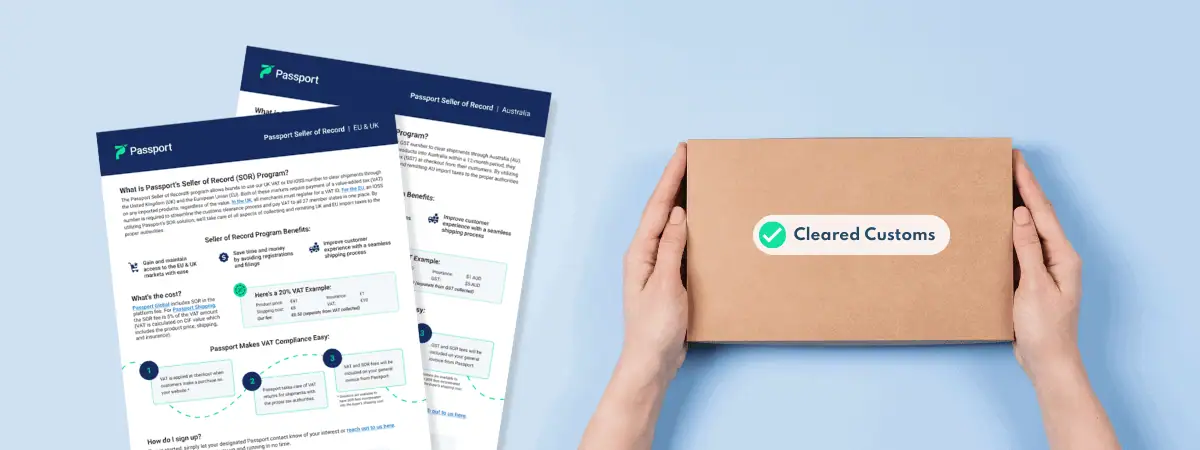
The Passport Seller of Record® program follows six steps:
- Enrollment – Your brand enrolls in Passport’s SOR program once it approaches a market’s specific sales threshold. Passport provides threshold monitoring to alert you before registration becomes required.
- Customer purchase – When a customer buys on your website, your brand collects payment for the product plus any duties, taxes, and shipping fees at checkout. Passport’s landed-cost solution calculates and displays these accurately in real time.
- Official seller designation – Passport purchases the items from your brand through a brief “flash sale,” becoming the legal seller of record for that transaction.
- Customs clearance – Passport’s own tax ID is used to clear the shipment through customs in the destination country.
- Tax management – Passport files tax returns with the appropriate authorities and handles any resulting inquiries.
- Invoicing – Passport invoices your brand for the taxes paid, plus a program fee.
Example of a Seller of Record Partnership
To demonstrate a Seller of Record partnership in action, let’s detail the experience of a US-based supplement brand as it ventures into Australia, choosing to collaborate with an SOR over an MOR. In this market, non-resident businesses are only required to start collecting GST once their sales in Australia exceed $75,000 AUD within a 12-month period. This means imports valued under the tax de minimis of $1,000 AUD are not subject to the 10% GST until the threshold is surpassed.
By partnering with a Seller of Record, the supplement brand can initially benefit from Australia’s generous de minimis rule, leading to significant savings since their typical order values fall within this exemption. Once they cross the sales threshold, taxes are efficiently collected at checkout, with the SOR handling all the necessary tax compliance responsibilities. This solution alleviates the brand from the burden of GST registration and remittance, as these tasks are fully managed by the SOR. Additionally, with direct payment processing, the brand enjoys the advantage of directly receiving sales revenue, all while retaining complete control over its customer data and store experience.
In an MOR structure, tax treatment and timing can differ based on how the provider is registered and how volume is aggregated across merchants. For brands evaluating models, it’s important to understand how thresholds, de minimis rules, and cash flow timing may apply in the markets that matter most.
This example clearly illustrates how utilizing a Seller of Record can empower brands to navigate international markets more efficiently while still ensuring compliance with tax regulations.
Is a Seller of Record Right for Your Brand?
A Seller of Record is ideal if you are:
- Expanding into new international markets
- Approaching tax registration thresholds
- Lacking internal compliance resources
- Looking to avoid setting up foreign entities
For most ecommerce brands, the Seller of Record (SOR) model is the fastest and most efficient path to global growth.
To further support international growth, Passport Global offers brands a streamlined solution for compliance and cross-border shipping. This comprehensive bundle pairs Passport Shipping with additional localization options and growth advisory, as well as a full suite of compliance services – including Seller of Record – for complete end-to-end support.
Our strategy integrates expert advice with tech-driven tools to ensure your products reach customers around the world. With Passport Global, navigating the complexities of global trade becomes seamless, allowing you to focus on growing your business.
If you’re still weighing SOR against MOR or Importer of Record more broadly, start with IOR vs. MOR vs. SOR: Which Global Ecommerce Model Does Your Brand Need? for the full decision framework.
Schedule a call with our team today to see how Passport can accelerate your international success.

Authored by Thomas Taggart
Head of Global Trade | Passport
Thomas Taggart is a cross-border commerce leader with more than 20 years of experience in international shipping and regulatory affairs. As the Head of Global Trade, Thomas helps ecommerce brands go global by simplifying international trade, tax, and product compliance issues. Prior to Passport, he brought international shipping solutions to market through multiple roles in UPS’s product development organization.
Frequently Asked Questions
What is the definition of a Seller of Record in ecommerce?
A Seller of Record is an entity that legally owns products at the moment of purchase and takes on responsibility for indirect tax compliance — collecting, reconciling, and remitting VAT/GST — while the brand keeps control of cash flow and customer experience.
What is an example of a Seller of Record in an ecommerce transaction?
A brand sells globally through its own website while a Seller of Record partner handles tax collection, reporting, and remittance for international sales. The brand receives customer payments directly throughout, unlike under a Merchant of Record model.
What are the responsibilities of a Seller of Record?
An SOR manages tax registration, collection, reporting, and remittance to the appropriate authorities, and handles tax-related inquiries or disputes on the brand’s behalf.
How does a Seller of Record differ from a Merchant of Record?
An SOR does not participate in the customer’s financial transaction — brands keep their own payment processor and receive funds directly. An MOR typically manages both the payment flow and the tax obligations together.
What is Passport’s Seller of Record program?
Passport Seller of Record® gives brands a fast way to handle VAT/GST compliance: brands collect VAT/GST at checkout using Passport’s tax IDs to clear shipments, and Passport manages filing and threshold monitoring on the back end.
Does Passport offer Merchant of Record services as well as Seller of Record?
Yes. Passport supports both models, so brands can choose how much of the transaction to outsource based on their market strategy.
When do ecommerce brands need a Seller of Record?
Typically when entering markets that require non-resident VAT/GST registration and point-of-sale tax collection, and the brand wants to outsource that compliance while keeping control of payments and checkout.
Is Seller of Record only for VAT/GST?
It’s most commonly used for VAT/GST and related filing obligations specifically; exact coverage can vary by provider and market.
What markets does Passport offer a Seller of Record program for?
Passport currently offers SOR solutions in the following markets:
- European Union (EU)
- United Kingdom (UK)
- Australia (AU)
- New Zealand (NZ)
- Norway (NO)
- Singapore (SG)
- Switzerland (CH)