




Small businesses are a major driver of the global economy, but a lot of smart, ambitious brands don’t stay “small” for long. With international customers easier to reach than ever, more ecommerce brands are expanding across borders earlier in their journey. The opportunity is there, but so are the challenges that come with it.
Once you start going global, everything from pricing to customer experience needs a second look. In honor of Small Business Week, we’re breaking down the biggest hurdles to clear when scaling internationally and how to get through them.
The 4 Biggest Small Business Challenges When Going Global
Selling across borders introduces more complexity than you might expect. What works in your domestic market doesn’t always translate to another, so you’re suddenly managing multiple regions, expectations, and systems, all of which require new approaches across core functions.
The brands that succeed are the ones that address this early and put the right strategies in place.
The challenges small brands face in going international can be summed up in four broad categories:
- Customer experience
- Shipping
- Payments
- Compliance
Challenge 1: Maintaining the Small Business Experience
Consumers love supporting small businesses in the U.S. and around the world. But even those who prefer to shop small have their limits. Too much confusion or too little convenience, and even your enthusiasts will take their money elsewhere.
So how do you deliver the personal feeling of shopping at a small business from another country?
Depending on the market, your considerations may include:
- Website & packaging translation
- Delivery expectations
- Regional competitors
- Currency conversion
- Cultural differences
For example, customers in Europe typically expect prices to include all taxes upfront. If you’re targeting the U.K., you may want to convert your storefront’s currency to pounds (£), while E.U. countries expect euros (€). The E.U. also spans a diverse cultural landscape, with no unified language, which adds another layer of complexity to messaging.
Getting all these details right isn’t easy when you’re competing against other established local and international brands. Shoppers are far more likely to convert when your site feels familiar—local currency, clear duties, and realistic delivery timelines all play a role.
Small businesses often struggle to deliver this level of attention due to limited resources or fragmented systems. However, since customer experience is a fundamental driver of ecommerce conversions, adaptations are necessary.
Customer Experience Solutions: Small Business Localization
Global success is built at the local level. In the context of international commerce, localization means adapting the shopping experience to market expectations.
Effective strategies include:
- Building market-specific web pages
- Converting prices to display the local currency
- Aligning checkout and delivery options with regional expectations
- Adjusting delivery timelines and messaging to set realistic standards
True localization requires end-to-end adjustments across your sales funnel. Thankfully, small business owners have access to more accessible software solutions than ever, especially with the rise of artificial intelligence (AI) in ecommerce.
Honing the customer experience is about more than service excellence; it directly impacts lifetime value and will guide your response to each of the following challenges.
Challenge 2: Cross-Border Shipping Complexity
One of the earliest hurdles to face is the added complexity of shipping internationally. Unlike domestic fulfillment, cross-border delivery often involves multiple carriers, longer transit times, and greater variability in delivery windows.
Slow order fulfillment, unexpected delays, lackluster return policies, and high shipping prices all add to customer frustration. For small teams without dedicated logistics expertise, managing these moving parts can quickly become overwhelming.
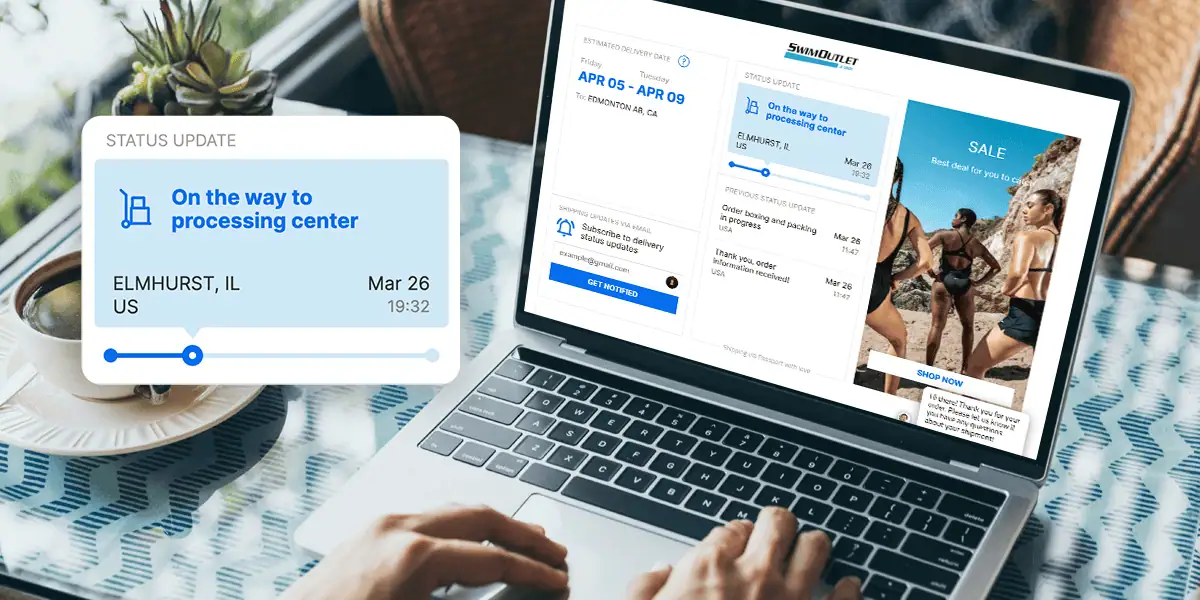
Visibility is another common friction point. If customers can’t easily track their orders (or don’t know where their package is), they’re far more likely to contact support or hesitate to order again.
Returns add another layer of complexity. Sending products back across borders is expensive, slow, and requires extra steps to claim refunds on import taxes. Without a clear strategy, businesses either absorb the extra costs or avoid offering returns altogether—both of which can harm profitability.
Especially for ecommerce-driven stores, shipping and returns are fundamental for driving conversions and repeat customers. Unexpected duties or high delivery costs at checkout are one of the top reasons for cart abandonment in cross-border ecommerce.
Shipping Solutions: Simplifying Small Business Logistics
Small businesses have a range of options for streamlining their shipping.
In the spirit of localization, consider your approach to each region’s shipping policies individually. You may find that multiple countries can use a shared model, but this isn’t a safe assumption until you run the numbers and validate landed costs.
For example, a small business in the U.S. may be able to offer free returns to customers in Canada and Mexico but find it unfeasible to do the same in a European market.
However, there are common best practices that any business can benefit from:
- Landed cost calculators help businesses estimate the actual cost of order fulfillment. These tools are a great starting point for evaluating an international market and the shipping terms you can provide.
- International shipping providers minimize carrier handoffs and often improve delivery consistency and speed, especially if they also manage returns. Fewer hands on a delivery lowers your risk and can reduce the total vendor count.
- Delivered duty paid (DDP) shipping terms are widely preferred for ecommerce compared to delivered duty unpaid (DDU). DDP shipping is simpler for customers and typically offers quicker, frictionless deliveries.
You can read more about duties in the Compliance section below.
- Small business software solutions—from ecommerce platforms to cross-border management portals—can centralize your fulfillment, tracking, and inventory workflows.
Beyond its convenience, this option is often more cost-effective than increasing your headcount or bogging down your team with complex routing tasks.
As your international demand grows, you can consider an in-country order fulfillment strategy to scale and save costs.
Building a foundation for international commerce often starts with a clear shipping strategy that informs pricing and product selection in your chosen market.
Challenge 3: International Payments, Pricing, and Profits
International expansion introduces some unavoidable costs—from longer-haul shipping to new taxes and added processing fees. Without clear visibility into these line items, small businesses may underprice products or absorb more fees than they can afford.
Pricing often needs to be adjusted to account for these added costs, requiring a balance between margin and competitiveness in each market.
Selling internationally often means expanding beyond a single currency or payment processing system. It’s not just about accepting payments; it’s about optimizing for conversion. Preferred payment methods vary widely by market, and missing even one popular option can impact sales.
International transactions may also involve longer processing times, currency exchange rates, and cross-border network fees. Your business may need to integrate new payment methods to cater to your customers’ preferences (e.g., digital wallets).
Other payment challenges small businesses face include:
- Fluctuating exchange rates that impact pricing and margins
- Market-specific financial regulations
- Slower payment settlement times
Global growth should drive profitability, not just revenue. Without cost clarity, businesses risk sluggish growth or losses.
Payments Solutions: Powering Smart Transactions
One of the most important shifts you can make (if you haven’t already) is estimating and tracking contribution margin per product, the revenue each item yields after variable costs. This metric is essential for deciding which products to sell and how to price them.
Multiplied by projected sales volumes, you can estimate each product’s total contribution, the funds left to cover fixed costs, and generate profit. Understanding these figures is key to projecting how much you can profitably invest in selling any given product.
For the actual transaction, there are several measures small businesses can take to smooth out their international checkouts:
- Multi-currency software solutions can automate the conversion and exchange processes so small businesses can effortlessly display prices in a customer’s local currency.
- Ecommerce platforms with integrated payment systems can enable a wide range of payment methods for your international audience. Functionality varies by platform, so confirm this early.
- Integrated landed cost displays are another valuable feature to have in your toolkit, enabling you to show customers accurate and transparent prices at checkout.
When pricing is clear, businesses typically see higher conversion rates and fewer abandoned carts.
Challenge 4: Duties, Customs, and Compliance
International sales add considerable exposure to taxes, regulations, and product restrictions. Each transaction spans at least one additional government on top of international trade laws and customs processing.
All that added compliance can overwhelm a team in the midst of a cross-national expansion.
Common regulatory frameworks small businesses must navigate include:
- Duties and tariffs: taxes charged on imports.
- Customs: international shipping, documentation, and taxation procedures.
- Consumption taxes: collected at checkout, common varieties include value-added tax (VAT) and goods and services tax (GST).
- Product regulations: restrictions specific to every country.
These requirements vary widely by market and can change frequently.
For small businesses, keeping up with these rules is difficult without specialized knowledge or tools. Missteps—such as under-declaring value or missing documentation—can lead to delays, penalties, or even shipment seizures. Without strong compliance procedures, businesses risk financial losses and damage to their brand.
Compliance Solutions: Reducing Risk for Small Business
Managing compliance manually is rarely sustainable for small teams.
Savvy business owners adopt solutions that simplify or outsource complexity:
- Seller of Record (SOR) models—where a partner manages tax registration, filing, and remittance on a brand’s behalf—allow brands to offload tax registration, filing, and remittance to a trusted partner.
- Tax and duty calculation tools ensure accurate pricing at checkout and smooth processing at customs (when professionally managed and regularly updated).
- Third-party compliance support is a cost-effective alternative to increasing your headcount, critical for small businesses navigating multinational laws without a dedicated compliance team.
- Customs software, such as the U.S. Customs and Border Protection’s ACE portal, can help businesses access shipment data and stay on top of import activity.
These solutions allow businesses to expand into new markets without complicating their internal operations.
Key Takeaways: Small Business Solutions to Global Challenges
Expanding globally introduces complexity across the board, but each hurdle can be addressed with the right systems and strategy.
Global commerce is more accessible and competitive than ever. However, even small businesses can succeed internationally when they treat cross-border expansion as a strategic priority, rather than just an extension of domestic operations.
By addressing the challenges early, you’ll build a sturdy foundation for sustainable growth.
• Language & cultural barriers
• Varying regional preferences
• Longer transit times
• Unpredictable delivery windows
• Limited shipment visibility
• Extra processing fees
• Slower payment settlement times
• Complex and changing regulations
• More documentation and legal requirements
• Cross-border tax exposure
• Translated copy and content
• Dedicated websites with localized presentation
• International shipping providers
• Cross-border logistics platforms
• Order tracking and visibility tools
• Displaying landed costs at checkout
• Contribution-centered pricing
• Localized payment methods
• International tax, duty, and customs tools
• Expert third-party compliance support
Small International Business FAQs
Global commerce can be an intimidating but rewarding challenge for small businesses. It’s natural to have questions, and Passport’s international ecommerce experts have answers.
When should a small business start selling internationally?
Many brands begin exploring international markets once they see organic demand from overseas customers. Signs can include international website traffic, cross-border inquiries, or repeat purchases from customers using freight forwarders. Expanding early can help businesses capture growth opportunities before competitors establish a presence.
What changes when a small business expands internationally?
Expanding internationally introduces new costs, regulations, and complexities. Domestic operations must become nuanced multi-market strategists, often requiring coordination across several partners and software solutions.
What are the biggest challenges for small ecommerce businesses scaling globally?
The biggest challenges typically fall into four areas: customer experience, shipping, payments, and compliance. Each introduces operational friction, but also opportunities for advanced solutions that unlock global growth.
What are the most important small ecommerce business solutions for expanding internationally?
Brands should prioritize solutions that enable localization, simplify logistics, streamline checkouts, and maintain compliance. These pillars are key to international growth. Specific solutions of common value include multi-currency payment systems, global shipping providers, storefront localization tools, and compliance models—such as Seller of Record—that reduce regulatory burden.
Can small businesses compete with larger brands internationally?
Yes. Small businesses often have advantages such as unique products, strong brand identity, and the ability to adapt quickly to customer needs. With the right localization, logistics, payment, and compliance strategies in place, small brands can successfully compete in global markets.
What is the biggest mistake small businesses make when expanding internationally?
One of the most common mistakes is treating international expansion as an extension of domestic operations rather than a distinct growth strategy. Successful brands take time to understand local customer expectations, pricing structures, shipping requirements, and compliance obligations before entering new markets.

Authored by Casey Bright
VP of Marketing | Passport
Casey Bright, an accomplished marketing leader with 15+ years of experience, specializes in brand and demand building for B2B and B2C global companies. Proficient in go-to-market, inbound, and demand generation strategy, she collaborates with sales, product, and RevOps teams to fuel revenue growth. Previously at Flock Freight, Casey achieved over 3x acquisition growth. Her diverse experience includes roles at Coyote Logistics, USG, and agency work for global brands like John Deere.