

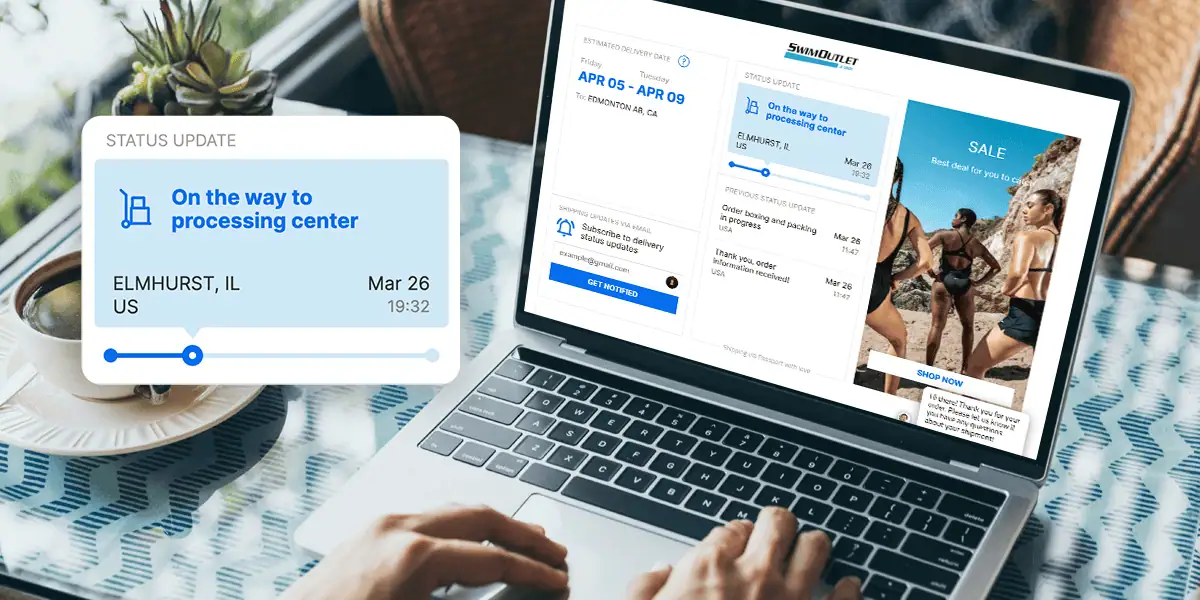
Global ecommerce brands have spent the last year navigating changing tariff environments, rising customer expectations, and increasing pressure to deliver faster, more localized experiences. But according to leaders from Passport and Ozlo, the brands winning internationally aren’t simply reacting to tariffs; they’re rethinking how they serve customers altogether.
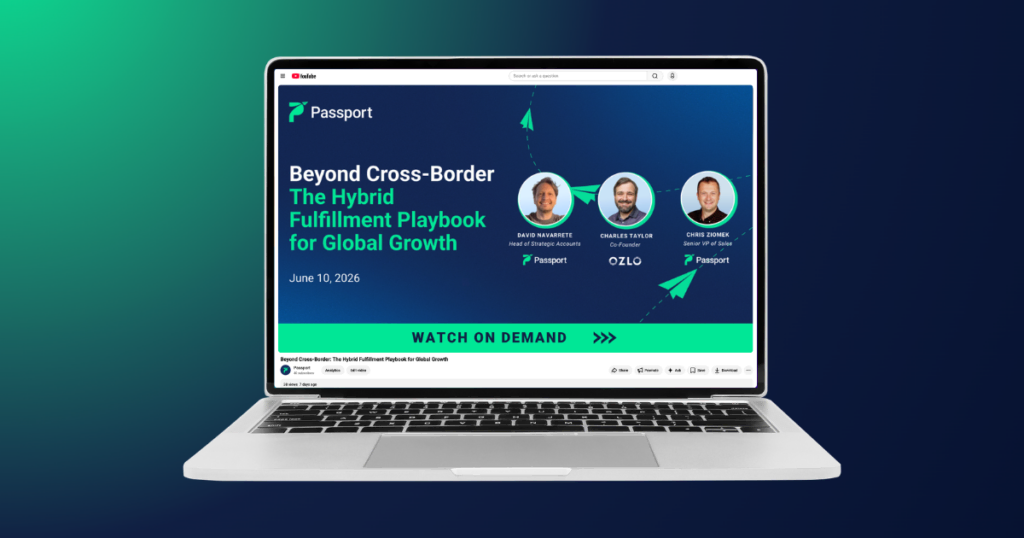
In our recent webinar, Passport’s Chris Ziomek and David Navarrete sat down with Charles Taylor, Co-Founder of Ozlo, to discuss how brands can use a hybrid international strategy that combines cross-border commerce with in-country inventory and fulfillment.
The conversation highlighted a key shift happening across ecommerce:
“We saw an influx of interest in in-country fulfillment as a reaction to tariffs. But tariffs shouldn’t be the only reason you move inventory into a country. There are a lot of great benefits. It got people thinking, ‘We may actually be able to scale our businesses more effectively by putting inventory in-country.'”
— Chris Ziomek, Passport
Want to hear all the insights firsthand? Watch the full webinar recording below.
The Shift From Cross-Border Only to Hybrid International Commerce
For years, cross-border shipping was the default way for brands to test international demand. It allowed companies to reach customers globally without the complexity of establishing local operations.
Today, many brands are taking the next step.
Rather than choosing between cross-border and local fulfillment, they’re adopting a hybrid model: maintaining cross-border capabilities while strategically placing inventory closer to high-demand markets.
This approach helps brands:
- Reduce delivery times
- Improve customer experience
- Lower landed costs
- Increase conversion rates
- Expand into marketplaces like Amazon and TikTok Shop more effectively
According to Passport, demand for in-country solutions has accelerated significantly over the past year as brands look beyond short-term tariff concerns and focus on long-term growth opportunities.
Why Ozlo Decided to Go In-Country
Ozlo, creator of the world’s smallest sleep headphones, launched internationally early in its growth journey.
For Charles Taylor and his team, the decision wasn’t driven solely by shipping costs or taxes; it was about scalability.
“International is more of the growth story. The U.S. is our biggest market today, but if we can make international profitable, it becomes a much bigger opportunity for the business.”
— Charles Taylor, Ozlo
As a growing startup, Ozlo didn’t have a large logistics team dedicated to international operations. The complexity of managing multiple markets could have become a significant barrier.
Instead, they found that moving inventory closer to customers actually simplified operations.
“Passport has truly been probably our easiest partner. They help manage our warehouses, regulatory requirements, and all the complexity that comes with going in-country.”
— Charles Taylor, Ozlo
Rather than adding work, the right infrastructure reduced friction and allowed the team to focus on growth.
The Canada Lesson: When Cross-Border Stops Making Sense
One of the webinar’s most practical examples came from Ozlo’s experience in Canada.
Initially, the team assumed Canada could be served entirely through cross-border shipping.
After all, Canada represented a relatively small portion of overall North American demand.
But growing sales quickly exposed hidden costs.
“We thought Canada was small enough that we’d just ship cross-border forever. But as volume grew, we started seeing DDP fees, especially in remote areas, that made it very clear in-country was the better way.”
— Charles Taylor, Ozlo
As order volume increased, those fees significantly impacted profitability and customer experience.
Ozlo quickly realized that local fulfillment offered a better solution.
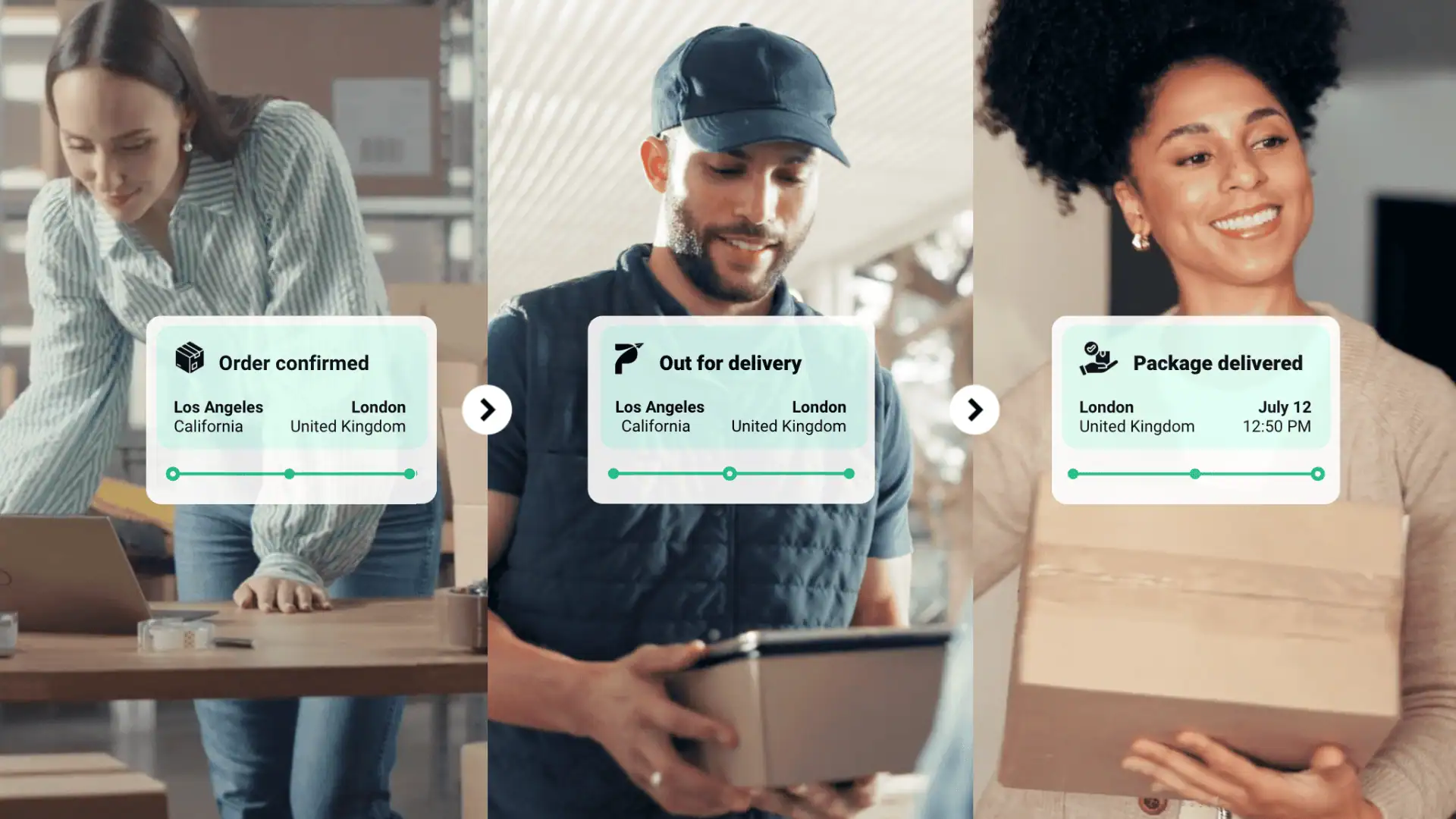
By shipping inventory into Canada and fulfilling domestically, the company reduced costs, improved delivery experiences, and simplified service for customers in more remote regions.
International Growth Is a Customer Experience Strategy
One of the webinar’s strongest themes was that brands often think about localization as a logistics initiative when they should be thinking about it as a growth initiative.
David Navarrete emphasized that successful international expansion requires a mindset shift.
“It’s more than a logistics initiative… it really becomes about customer experience, and it’s really a growth initiative.”
— David Navarrete, Passport
In-country fulfillment creates advantages that customers notice immediately:
- Faster shipping
- More reliable delivery estimates
- Lower surprise fees at checkout
- Easier returns
- Improved marketplace eligibility
Ultimately, these improvements drive better conversion rates and stronger customer loyalty.
The Conversion Impact of Cost Transparency
When customers encounter unexpected duties, taxes, or shipping fees, conversion suffers. But the benefits of localized fulfillment go beyond cost transparency alone.
“We see it across all of our clients. Local fulfillment gives brands more margin flexibility, allows for lower free shipping thresholds, and improves delivery times. All of which contribute to higher conversion rates.”
— David Navarrete, Passport
By bringing inventory closer to customers, brands can reduce friction throughout the buying journey while creating a more predictable and localized shopping experience. Faster delivery, lower shipping costs, and fewer surprises at checkout can all contribute to stronger conversion rates and increased customer loyalty.
Marketplaces Are Accelerating the Need for Local Inventory
Another major topic was the growing role of marketplaces in international expansion.
According to Passport, brands exploring in-country fulfillment today are increasingly doing so alongside marketplace strategies.
Amazon, in particular, remains a dominant force, and the benefits extend beyond marketplace sales alone. Taylor pointed to the broader awareness and credibility Amazon creates for brands.
“Amazon really is the big player. There’s a halo effect. Amazon spends a ton of money getting people onto their website. Customers discover your brand there, read the reviews, and then often come back to buy directly.”
— Charles Taylor, Ozlo
Consumers often discover brands on Amazon, read reviews, validate trust, and then continue their purchasing journey elsewhere.
However, many marketplace programs require local inventory to unlock faster delivery promises and improve competitiveness—making in-country fulfillment an important enabler of marketplace growth.
Common Misconceptions About Going In-Country
Many brands assume local fulfillment requires massive operational investment or creates overwhelming complexity.
In reality, the webinar highlighted that the biggest challenge is often simply inventory planning.
Brands need to think strategically about:
- Where demand exists
- How inventory should be allocated
- Which markets justify local fulfillment
- How marketplaces fit into the broader strategy
Beyond that, many of the operational hurdles brands fear are increasingly being solved by specialized partners and infrastructure providers.
The bigger risk may be waiting too long.
10 Signs You’re Ready for Local Fulfillment
One of the final topics discussed during the webinar was how brands can evaluate whether they’re ready to move inventory closer to customers. The answer isn’t simply about tariffs or shipping costs – it’s about identifying markets where localized fulfillment can unlock meaningful growth.
According to the panel, brands should consider several factors:
1. Consistent demand in an international market – If a country is generating a steady volume of orders, local fulfillment may help improve profitability and customer experience. Brands are typically ready for in-country fulfillment when they generate $750K+ annual GMV in a non-home market.
2. Product weight and size – Average orders that weigh 10+ lbs or have large DIM weights are more expensive to ship cross-border. Fulfilling locally reduces those costs substantially.
3. Average order value – Brands with an average order value of $350 or more can unlock greater savings by fulfilling locally, and typically want to deliver to their customers faster.
4. Product catalog size – Brands with 500 SKUs or less typically find local fulfillment much easier to manage due to less inventory coordination strain.
5. Shipping costs or delivery times – Long transit times, expensive shipping, or frequent duty-related friction when shipping cross-border can signal an opportunity to move inventory closer to customers.
6. Local shipping experience importance – Some brands decide they want to offer in-country shipping wherever they sell in order to provide the best customer experience possible.
7. Marketplace expansion plans – Most international marketplaces like Amazon or TikTok Shop require local inventory to meet delivery expectations.
8. B2B retail presence – Local inventory makes it much easier to serve B2B retail partners in key markets. Brands who want to establish or grow B2B retail should consider local fulfillment as a key to unlock this growth.
9. Conversion challenges – Unexpected fees, high shipping costs, or lengthy delivery windows can negatively impact conversion rates and customer satisfaction.
10. Operational readiness – Brands should evaluate whether they have the inventory planning processes and partners in place to support local fulfillment without creating unnecessary complexity.
As the discussion highlighted, the decision should ultimately be driven by growth potential rather than logistics alone. The most successful brands aren’t simply asking, “How do we avoid tariffs?” They’re asking, “Where can local fulfillment help us create a better customer experience and accelerate growth?”
Key Takeaways for Ecommerce Brands
The webinar reinforced a clear message: international expansion is evolving.
Brands no longer have to choose between cross-border and local fulfillment. The most successful companies are blending both approaches to create better customer experiences and unlock new growth opportunities.
Key lessons include:
- Tariffs may spark the conversation, but customer experience should drive the decision.
- In-country inventory can improve profitability by reducing fees and shipping costs.
- Localized fulfillment supports stronger conversion rates through faster delivery and price transparency.
- Marketplace expansion often becomes significantly more effective with local inventory.
- International operations should be viewed as a growth initiative, not simply a logistics project.
As ecommerce continues to globalize, brands that bring inventory closer to customers will likely be best positioned to capture demand, improve performance, and scale sustainably across markets.
“If brands can change their focus and look at it through that lens, versus simply moving logistics around, that’s what sets them up for success.”
— David Navarrete, Passport
Frequently Asked Questions
What is in-country fulfillment?
In-country fulfillment involves storing inventory within a target market and shipping orders domestically, rather than fulfilling every order cross-border from a single origin country.
When should a brand consider moving inventory in-country?
Brands should consider in-country fulfillment when they see consistent demand in a market, want faster delivery times, need greater cost predictability, or are expanding into marketplaces such as Amazon and TikTok Shop.
Is in-country fulfillment only useful because of tariffs?
No. While tariffs can influence the decision, faster shipping, improved customer experience, better conversion rates, and marketplace expansion are often even stronger reasons to localize inventory.
Do brands have to choose between cross-border and in-country fulfillment?
Not necessarily. Many brands use a hybrid strategy, combining cross-border shipping with localized inventory in their highest-growth markets.
Which markets are most commonly used for initial in-country expansion?
Canada, the UK, the EU, and Australia are often among the first markets brands evaluate due to strong ecommerce demand and established fulfillment infrastructure.
How much international demand should a brand have before considering local fulfillment?
While every business is different, brands often begin evaluating local fulfillment once they generate meaningful and consistent demand in a specific market. During the webinar, the panel noted that many brands become strong candidates when they reach approximately $750K or more in annual GMV in a non-home market.
What types of products benefit most from local fulfillment?
Heavy, bulky, or high-value products often see the greatest benefit from local fulfillment because cross-border shipping costs can quickly become expensive. Brands selling products with higher average order values may also benefit from faster delivery and improved customer experience.
Can local fulfillment support wholesale and retail expansion?
Yes. Maintaining inventory within a market can make it easier to support wholesale accounts, retail partners, and other B2B opportunities by reducing lead times and simplifying replenishment.
Is local fulfillment difficult to manage operationally?
Not necessarily. Many brands partner with providers that help manage warehousing, inventory movement, compliance requirements, and other operational complexities. The right partners can significantly reduce the burden of expanding internationally.

Authored by Casey Bright
VP of Marketing | Passport
Casey Bright, an accomplished marketing leader with 15+ years of experience, specializes in brand and demand building for B2B and B2C global companies. Proficient in go-to-market, inbound, and demand generation strategy, she collaborates with sales, product, and RevOps teams to fuel revenue growth. Previously at Flock Freight, Casey achieved over 3x acquisition growth. Her diverse experience includes roles at Coyote Logistics, USG, and agency work for global brands like John Deere.