





For ecommerce brands, peak season is no longer a single, isolated surge centered around Black Friday, Cyber Monday, and the weeks leading up to New Year’s. In 2026, that Q4-focused approach is becoming less reliable.
Economic pressures, consumer expectations, trade regulations, AI, and supply chain challenges are all evolving faster than historical trends can predict. This dynamic environment is reshaping holiday sales periods and the way businesses prepare for them.
The result is a longer, more complex seasonal calendar, especially for brands selling internationally.
And the impact extends well beyond the calendar. It affects staffing, inventory, fulfillment, and the broader economics of seasonality.
Six distinct trends are shaping the 2026 holiday season:
- Holiday shopping keeps starting earlier.
- Customer expectations are still rising.
- International demand is driving growth.
- Inventory and fulfillment strategies are evolving.
- AI is changing holiday ecommerce.
- Tariffs, customs, and conflict are rewriting the rulebook.
Let’s take a closer look at each one.
1. Holiday Shopping Starts Earlier
As the holiday shopping season begins earlier, businesses need to prepare earlier, too.
Cash-strapped consumers are starting their holiday shopping sooner as they plan purchases and look for deals ahead of the traditional schedule.
Economic uncertainty and concerns about rising prices are encouraging shoppers to be more deliberate about when and where they spend, extending the buying period and shifting demand forward.
As consumers become more selective about how they allocate their budgets, many are taking advantage of early deals rather than waiting for holiday sales. Demand that was once clustered around Black Friday and Cyber Monday is now building much earlier.
For businesses, this changes the timing of peak season preparation. Inventory, fulfillment capacity, promotions, and customer support need to be ready long before the conventional rush begins. Waiting until Q4 to prepare is no longer a viable option.
However, an extended shopping window can also be an operational advantage. A more gradual, sustained increase in demand may be easier to manage than a concentrated spike. But that benefit depends on having the infrastructure and operational flexibility to support customers consistently throughout a longer season.
The holiday season is becoming less about preparing for a few high-volume weeks and more about managing elevated demand over several months.

2. Customer Expectations Are Rising
While consumers are becoming more budget-conscious toward gift and shipping prices, their expectations are only rising.
Shoppers are paying closer attention to the value they receive with every purchase while still expecting a convenient experience across checkout, delivery, and returns.
Competitive pricing can help appeal to customers who are carefully considering what they get for their money.
Clear pricing also extends beyond the product itself. Customers want transparency around shipping costs, taxes, and other charges that affect the final price. As shoppers plan their purchases more carefully, surprise costs can quickly lead to abandoned carts.
A convenient checkout experience is also key to maximizing conversions during peak season. Limited payment options or a time-consuming checkout process can drive customers away, particularly when they’re already comparing options across multiple sites.
Delivery also remains critical to customer satisfaction. Fast, reliable, and predictable shipping is particularly challenging—yet essential—during the holidays, when customers are often purchasing gifts on a deadline. Unclear or unreliable delivery promises introduce unnecessary friction.
The same goes for returns. Straightforward return processes can reduce uncertainty and give customers greater confidence when purchasing, particularly when buying gifts or sized products.

Success Story: Promix Nutrition
With Passport, Promix created a localized checkout experience with clear pricing and duty-paid delivery, increasing its international conversion rate by 200% and growing its international repeat customer rate by 40%.
3. International Demand Is Driving Growth
As domestic demand becomes less predictable and international order fulfillment gains accessibility, ecommerce brands are looking across borders for new sources of peak-season revenue.
Expanding into new markets diversifies a brand’s customer base, shopping cycles, and sources of demand. It also opens the door to more regional shopping events throughout the year.
The timing of international demand can vary, but that can be an advantage for brands equipped to manage it. Different countries have different holiday calendars, creating opportunities beyond the traditional Western holiday season.
A global approach can extend the window in which ecommerce brands capture seasonal demand. Brands that do this effectively can benefit from regional peaks throughout the year.
International expansion can also provide stability if domestic demand falters. Rather than relying on a single market to drive peak season growth, ecommerce brands can use global markets to offset regional downturns.
But international expansion is no small undertaking. To create a localized experience, brands should consider:
- Shipping terms and landed costs
- Currencies and payment methods
- Translations, cultural sensitivities, and customer preferences
Cross-border selling can also be a practical way to test international demand before making larger investments in a new market. Even a month’s worth of data on order volume, customer behavior, shipping economics, and other performance metrics can reveal whether further investment is justified.
As more retail moves online and shoppers become increasingly comfortable with international transactions, cross-border sales offer new levers for growth and a layer of insulation against economic volatility.

Success Story: Ogee
After partnering with Passport, Ogee scaled international sales 10x during peak season. Compared with the previous year, the brand achieved 370% growth in international GMV, 632% growth in shipments delivered, and doubled the number of markets it served.
4. Fulfillment Strategies Are Evolving
As shopping trends continue to shift, it’s more important than ever for ecommerce operations to have flexibility built in. Leaders are looking for ways to make delivery faster and more reliable while managing higher transit costs and global supply chain disruptions.
These pressures are prompting ecommerce brands to reconsider where they position inventory. While centralized inventory has traditionally been the go-to solution for operational simplicity, distributed inventory can offer greater flexibility in uncertain times.
In-country fulfillment, for example, significantly reduces the distance products travel to reach international customers, lowering transit times and, at scale, overall costs. This model can make it easier to provide faster, more reliable delivery while allowing brands to import inventory in bulk rather than shipping each order across borders individually. Strategically positioning inventory may help reduce certain transportation and fulfillment costs.
Brands don’t necessarily need to build extensive international infrastructure themselves. The prevalence of flexible third-party logistics (3PL) services has lowered the upfront investment needed to get started and scale quickly.
Distributed inventory can help brands balance shipping speed, reliability, transportation economics, and flexibility in the face of uncertainty. That balance is increasingly important as peak season becomes less predictable.
Fulfillment models designed for a short holiday surge may be less effective during a longer season of elevated demand.

Success Story: Ozlo
Ozlo used Passport’s In-Country Enablement solution to position inventory closer to customers in Canada and Australia, increasing conversions by 40%. This localized fulfillment strategy helped Ozlo deliver a faster, more seamless experience without building a large international operations team.
5. AI Is Changing Holiday Commerce
AI is playing an increasingly important role in both the customer-facing and operational sides of holiday shopping.
As consumer habits diverge from historical trends, ecommerce brands are turning to AI to inform projections, improve productivity, and respond more efficiently to rapid market shifts.
On the customer side, AI is changing how people discover and evaluate products, reshaping the shopping journey itself.
At the same time, brands can use AI tools to analyze demand and identify market shifts. Real-time analysis supports faster decision-making as brands prepare for fluctuating demand during the 2026 peak season.
More responsive forecasting can inform decisions around inventory, fulfillment capacity, and customer support, helping teams adjust as conditions change rather than relying solely on historical patterns.
AI is helping brands analyze trends across markets and identify risks and opportunities more quickly. For ecommerce companies becoming more geographically distributed, the ability to analyze real-time performance at scale is critical.
AI can support the omnichannel experiences consumers increasingly expect, helping brands manage more complex shopping journeys and customer interactions across channels.
For ecommerce leaders, AI is another tool for navigating the uncertainty and variability of peak season commerce. Its value lies less in replacing existing planning processes and more in helping teams make faster, better-informed decisions.
6. Tariffs, Customs, and Global Uncertainty Are Reshaping Strategy
Peak season in 2026 is unfolding against a backdrop of trade wars, evolving customs frameworks, and geopolitical instability. Together, these forces are influencing how brands approach the holidays.
Import data reveals that U.S. businesses are stocking up earlier to reduce their exposure to potential tariffs, with surges starting as early as May rather than the usual late-summer rush.
Tariff changes directly affect import costs, pricing decisions, and product contribution margins. For brands selling across borders, shifts in trade policy can alter the economics of a market and require adjustments to pricing or sourcing strategies.
Evolving customs regulations add another layer of complexity, especially for sellers with low-cost products that previously benefited from de minimis exemptions.
Ecommerce brands around the world are updating their compliance procedures in response to changes in U.S. and EU customs regulations.
Fluctuating fuel prices add another variable, potentially changing the economics of existing shipping and fulfillment strategies.
Geopolitical conflict and broader global instability create additional uncertainty throughout transportation networks and supply chains.
These conditions make cost visibility on every order more important than ever. In a volatile environment, costs and margins can change quickly.
Beyond shipping, storage, and order fulfillment, these trends may influence where brands source materials, which markets they prioritize, and how they structure pricing and promotions.
For that reason, ecommerce strategies for peak season 2026 need to account for volatility. An offer that works under today’s conditions may require a different approach as transportation costs or customs requirements change.
The brands best positioned to navigate peak season will be those that can adjust to rapidly changing economic, regulatory, and geopolitical conditions. Flexibility is now an essential part of international planning rather than simply a contingency plan.
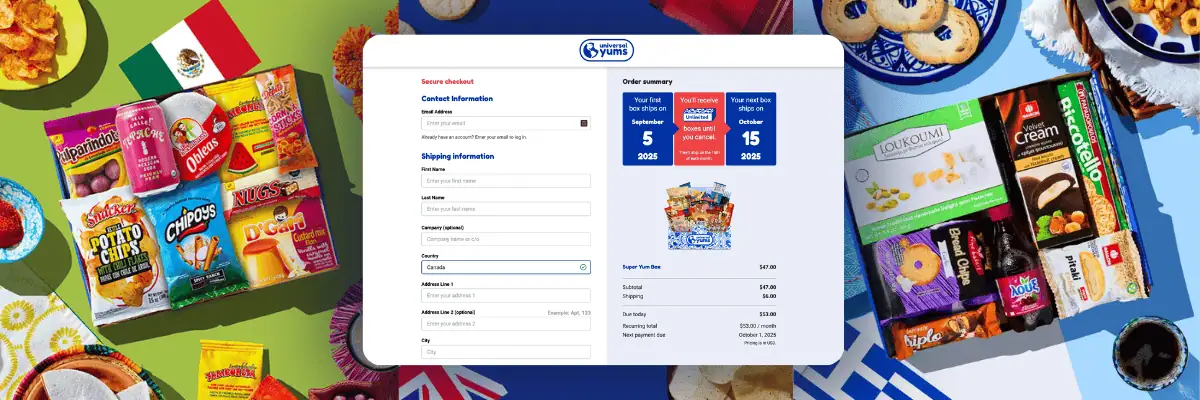
Success Story: Universal Yums
As tariff changes increased costs for its globally sourced products, Universal Yums worked with Passport to navigate shifting trade rules, consolidate international logistics, and lower costs without raising prices for customers.
Key Takeaways: The New Peak Season Playbook
Though the rules are being rewritten, several consistent trends can help guide ecommerce brands through these unpredictable conditions. Consider the following priorities as you prepare for peak season:
- Start preparing earlier – Consumer demand is spreading across a longer holiday shopping window, requiring earlier planning for operations, staffing, and inventory. (There’s no time like the present.)
- Protect the customer experience – Transparent pricing, reliable delivery, and easy returns are increasingly essential for conversion and retention.
- Think globally – International demand is more accessible than ever. Expanding beyond your home market can diversify your customer base and help stabilize revenue during regional downturns.
- Build flexibility into fulfillment: Brands need infrastructure that can adapt to changing economic conditions at a moment’s notice. Distributed inventory can help improve delivery speed while keeping fulfillment more cost-effective.
- Use AI strategically: Better forecasting and faster decision-making can help brands navigate real-time changes. When historical trends fall short, AI-powered analysis can help close the gap.
- Plan for regulatory uncertainty: Tariffs, customs, transportation costs, and geopolitical events should be factored into risk management and contingency plans. Brands should also explore opportunities to position inventory for more favorable tax and tariff treatment.
Taken together, these trends point to a 2026 peak retail season that is longer and less predictable. Brands that prepare for the unexpected will be better equipped to adapt as conditions change.
Turn Peak Season into Global Growth
Passport helps ecommerce brands simplify international shipping, improve the customer experience, and build flexible fulfillment strategies. Get the infrastructure and expertise you need to make the most of this holiday season and beyond.

Authored by Casey Bright
VP of Marketing | Passport
Casey Bright, an accomplished marketing leader with 15+ years of experience, specializes in brand and demand building for B2B and B2C global companies. Proficient in go-to-market, inbound, and demand generation strategy, she collaborates with sales, product, and RevOps teams to fuel revenue growth. Previously at Flock Freight, Casey achieved over 3x acquisition growth. Her diverse experience includes roles at Coyote Logistics, USG, and agency work for global brands like John Deere.