




Canada can be an exciting market for ecommerce brands looking to reach new customers and grow internationally. But establishing a sustainable presence there takes more than opening your store to Canadian shoppers. Your approach to fulfillment, compliance, and localization can shape both your costs and customer experience.
This guide walks you through the key decisions to consider as you plan your expansion, so you can build a strategy for profitable growth.
Plus, see how leading brands are finding success in Canada, including how Carpe grew shipments by 63%, Ozlo increased conversion by 40% after moving inventory closer to customers, and Universal Yums achieved 12x volume growth.

Why Canada Is an Attractive Ecommerce Market
Canada is a well-established ecommerce market with substantial online spending and fresh signs of growth. Retail ecommerce sales totaled CAD $59.2 billion in 2025, up 3% from the year before. The latest monthly figures add another encouraging signal: sales reached CAD $5.6 billion in August 2026, up 15% from August 2025. Together, these numbers show a sizable market with active online demand, giving brands a strong base to reach new customers.
Cross-border purchases are already part of how many Canadians buy online. About 55% of Canadian online shoppers bought from a foreign retailer in the past year, according to Capital One Shopping research. In the International Post Corporation’s 2025 Cross-Border E-commerce Shopper Survey, Canadian shoppers most often cited fast delivery (42%) and a wider choice of products and brands (35%) as reasons to buy from abroad. For international brands, that means reaching consumers who are already looking beyond domestic retailers, and who expect reliable delivery when they do.
That interest spans several product categories. Clothing and footwear appear in 42% of cross-border purchases, followed by personal care and beauty, with consumer electronics also among the top categories. Order values are notable too: 51% of cross-border purchases are worth US$50 or more, and that share is rising. Together, the figures point to demand across multiple categories and meaningful spending on international purchases.
What Do Ecommerce Brands Need to Sell in Canada?
To successfully sell online in Canada, international ecommerce brands need to:
- Confirm that their products meet Canadian import and labeling requirements.
- Choose between cross-border shipping and local fulfillment.
- Calculate customs duties, GST/HST, and any applicable tariffs.
- Offer transparent landed costs and delivery options at checkout.
- Localize the shopping experience with CAD pricing and relevant language options.
The sections ahead break down each area, with practical guidance to help you plan your entry into the Canadian market.

Product Rules for Brands Selling to Canadian Customers
Canada is generally a very accessible market for ecommerce brands, but some product rules are worth reviewing before opening your store to Canadian customers. Requirements can vary based on a product’s ingredients and claims, order quantity, and how the shipment is imported. Here are a few areas to keep in mind:
- Cosmetics and personal care: Check Canadian ingredient and labeling rules, along with Health Canada’s notification requirements. See our guide to shipping cosmetics to Canada.
- Supplements and health products: Some orders imported by an individual for personal use may qualify for an exemption, generally for less than a 90-day supply. Eligibility depends on the product, its ingredients, and the import arrangement. See our guide to shipping supplements to Canada.
- Food and beverages: Some personal-use shipments may qualify for exemptions, but quantity limits vary by product. See our guide to shipping food and beverages to Canada.
- Pet products: Products containing animal-derived ingredients may face extra restrictions or clearance requirements. See our guide to prohibited and restricted goods.

Product rules can become harder to manage as brands enter multiple markets. A partner with global trade expertise can help teams understand what’s allowed in each region and prepare for launch. For example, Promix needed clarity on where its supplements could ship and what compliance steps to take. Passport helped the team navigate those rules, making it easier to expand into dozens of markets.
Choosing a Canada Fulfillment Model
As you plan to sell in Canada, consider how steady demand is and what it costs to get each order to its destination. Cross-border shipping can be a practical place to start when sales are new or inconsistent, or when you have a broad product range and want to keep inventory in one location.
Local fulfillment may be worth evaluating when Canadian orders are consistent, shipping each order internationally is affecting your margins, or your products are bulky or expensive to ship individually. Compare cross-border shipping costs with the cost of sending inventory to Canada, storing it locally, and managing stock across locations. Delivery times and returns can also help you decide.
Moving inventory into Canada also means deciding who will act as the importer of record for those shipments. Some brands register as a non-resident importer (NRI), which comes with its own customs and tax obligations. Before you choose, see our guide to what DTC merchants should consider about Canada NRI shipping.

Ozlo offers one example of how your approach can change as your business grows. After positioning inventory closer to customers in Canada, the brand saw conversion increase 40% year over year. Read Ozlo’s full success story here.
You can also combine the two models, keeping high-demand products in Canada while shipping less predictable items from your existing inventory. For a closer look at the trade-offs, check out our guide to cross-border vs. in-country fulfillment. Where inventory sits also affects customs, duties, and taxes, which we’ll cover next.
Duties, Taxes, and Customs Requirements in Canada
Before setting prices for Canada, you’ll want to factor in your landed cost: the total cost of getting an order to the customer, including the product, shipping, duties, and taxes.
Canada applies a 5% federal Goods and Services Tax (GST) to most imported goods. Some provinces charge a separate Provincial Sales Tax (PST), while others use a Harmonized Sales Tax (HST) that combines federal and provincial taxes. For more detail, see our guide to GST/HST in Canada.
For qualifying courier (non-postal) shipments from the U.S. or Mexico, Canada has two low-value thresholds, called de minimis thresholds. They determine when import charges are waived:
- Tax de minimis threshold: CAD $40. Shipments worth $40 or less are generally free of import taxes and customs duties.
- Duty de minimis threshold: CAD $150. For shipments worth more than $40 and up to $150, customs duty is generally waived, but taxes still apply. Above $150, duties and taxes may apply.
Postal shipments and courier shipments from other countries have different thresholds. To learn more about low-value shipments and import costs, see our guide to Canadian tariffs and import costs for ecommerce brands.
For most direct-to-consumer shipments, duties and taxes are assessed when the order enters Canada, and many U.S. ecommerce brands don’t need to register for a Canadian tax ID, simplifying compliance during early expansion. With DDP shipping, those charges are included in the checkout total and customs clearance is arranged before delivery, so customers know what they’ll pay upfront.
Brands should also check whether Canada’s new tariffs affect their products. Since September 8, 2026, certain U.S.-origin goods have faced additional tariffs of 15%, 25%, or 50%, depending on the product. Some listed goods may face these tariffs even below the low-value thresholds above. Read our guide to Canada’s retaliatory tariffs for cross-border sellers to learn more and check whether your products are affected.

Duties, taxes, customs compliance, and changing tariffs can be a lot to manage, but the right partner can help simplify the process and keep costs more predictable. Universal Yums’ experience offers one example. COO Joseph Jarroush described how Passport helped consolidate carriers, navigate Canada Post disruptions, and manage changing tariff costs. With a more streamlined shipping operation, Universal Yums grew its Canadian shipment volume by up to 12x. Read Universal Yums’ full success story here.
What Canadian Customers Expect at Checkout and Delivery
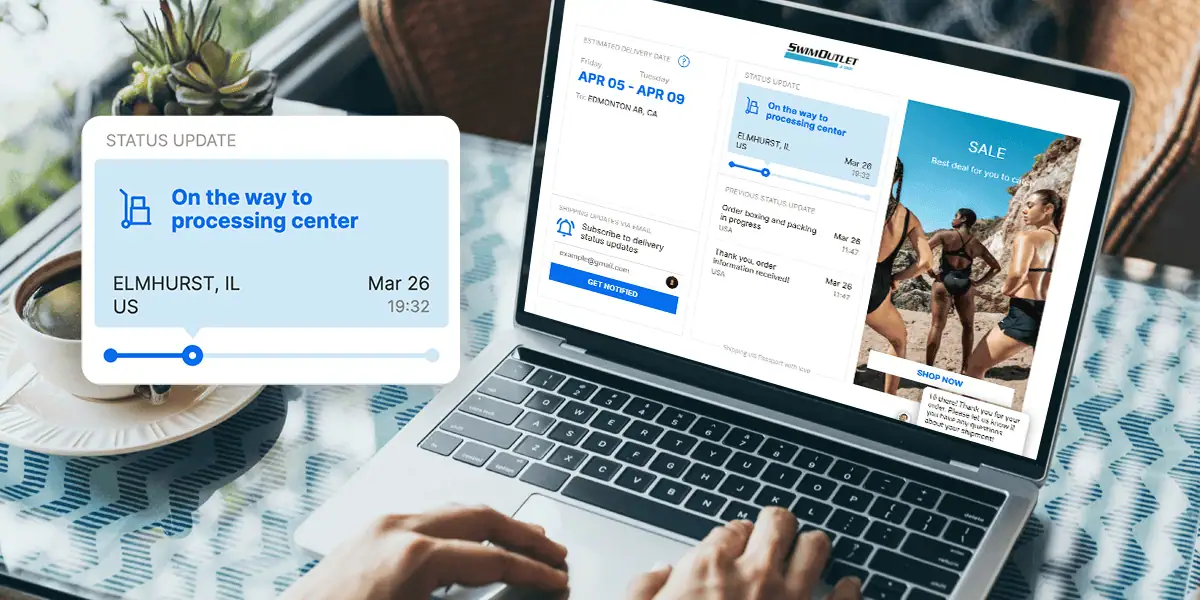
Canadian customers value clear shipping costs and delivery options at checkout. They want to know what they’ll pay and when their order is expected to arrive, including any import charges collected upfront. After purchase, tracking and delivery updates help them stay informed. For a checklist covering landed costs, shipping policies, and customs-ready product data, see our guide to meeting the shipping expectations of Canadian shoppers.
Beyond delivery details, small local touches can make checkout feel more familiar. Consider showing prices in Canadian dollars and offering French-language content for Quebec shoppers.
The preference for flexibility also shows up in Canada Post research, which found that 78% of respondents said free shipping influenced their online purchase decisions, while 88% wanted a choice between faster and free shipping at checkout. A free-shipping threshold or lower-cost standard option alongside faster paid delivery can give shoppers that choice.

Carpe’s experience shows why clear costs and reliable delivery matter. Before working with Passport, some customers ordering to Canada faced high shipping costs, long waits, and duties due at pickup. Passport helped bring landed costs into checkout and improve shipping and tracking. Carpe’s shipment volume in Canada grew by 63%, while international support tickets related to duties and taxes fell to nearly zero. Read Carpe’s full success story here.

Real Results from Brands Expanding into Canada
The impact of a stronger international setup can show up in several ways: more completed purchases, fewer questions about import charges, or the ability to handle more orders without passing every added cost along. These brands worked with Passport to address challenges in those areas.
- Ozlo used Passport’s local fulfillment to bring inventory closer to customers in Canada. After the move, conversion grew 40% year over year.
- For Carpe, friction showed up at checkout and delivery. Passport helped show landed costs upfront and improve shipping and tracking. Canadian shipment volume grew 63%, and its team received almost no international support requests about import charges.
- Universal Yums was managing multiple carriers and tariff-related cost pressure. Passport helped simplify its shipping operations and lower costs, so the brand could avoid raising prices. Weekly shipments to Canada grew from less than one pallet to as many as 8–12 outside subscription renewal periods, reaching up to 12x growth.
Together, these results show how improvements to fulfillment, checkout, or shipping operations can help brands support growth in the market.
Canada Ecommerce Expansion Checklist
Canada can be a strong next market for ecommerce brands, but a sustainable launch depends on bringing product requirements, shipping costs, fulfillment, and the customer experience together. Use this checklist to turn the guide into a practical plan:
- Confirm product eligibility – Check whether your products can be sold and shipped to Canadian customers, and review any category-specific ingredient, labeling, notification, or import requirements.
- Choose a shipping and fulfillment approach – Decide whether orders will ship across the border or from inventory in Canada. Compare order volume, product size and weight, delivery times, customs clearance, and the operational work involved.
- Calculate landed costs – Factor in shipping, duties, taxes, and any applicable tariffs so you can price orders and understand your margins.
- Plan the checkout and delivery experience – Make prices, shipping options, and delivery estimates clear. Decide how you’ll provide tracking and keep customers informed after purchase.
- Review performance after launch – Monitor conversion, landed costs, delivery times, customer support questions, and repeat purchases. Use what you learn to adjust your shipping or fulfillment approach as demand develops.
Every brand’s path into the Canadian market looks a little different. Start with a shipping and fulfillment setup that fits your current demand, then adapt as your Canadian sales grow.

Not sure where to start?
Passport can help you compare your options and plan a launch that fits your business. Tumble expected its local fulfillment launch in Canada to take four to five months; with Passport, it went live in less than 60 days.
Reach out to our team today to start growing in Canada.
Frequently Asked Questions About Canada Ecommerce
What duties and taxes apply to ecommerce orders shipped to Canada?
Most imported goods are subject to Canada’s 5% federal GST. Depending on the province, PST or HST may also apply. Customs duties can apply too, depending on the product’s tariff classification and country of origin. For more information, see our GST/HST guide, which explains how these taxes work, and our article on Canadian tariffs and import costs, which covers when duties may apply.
What are Canada’s low-value shipment thresholds?
For qualifying courier shipments from the U.S. or Mexico, shipments valued at CAD $40 or less are generally free of duties and taxes. Above $40 and up to $150, duties are generally waived, but taxes still apply. Above $150, duties and taxes may apply. Postal shipments and shipments from other countries have different thresholds. For more information, see our article on Canadian import costs, which explains how these thresholds work.
Should I use DDP shipping when selling to customers in Canada?
DDP can provide a better customer experience by showing import charges at checkout and arranging customs clearance before delivery. That way, buyers know what to expect and avoid an unexpected bill when their order arrives. For a deeper dive into DDP and how it compares with other shipping options, see our DDP shipping guide.
Do I need to register for GST/HST to sell to Canadian customers?
It depends on your sales and fulfillment setup. Most brands shipping orders directly from abroad do not need to register, while holding inventory in Canada or other business activities can change the requirements. For more information, see our GST/HST guide, which explains how these taxes work and what ecommerce brands should consider.
What product rules should I know before selling in Canada?
Product rules vary by category. Cosmetics, supplements, food, and pet products are a few common examples that may need extra checks. Here are some resources to help you see what applies to your products: prohibited and restricted goods, cosmetics, supplements, and food and beverages.
Should I ship orders to Canada cross-border or use local fulfillment?
Cross-border shipping can be a good way to start and see how demand develops before placing inventory in Canada. Once sales become steady, local fulfillment may make sense, especially if faster delivery or lower per-order shipping costs become priorities. Order volume, product size, and shipping costs can help you decide when to make that shift. For a deeper comparison, see our article on cross-border ecommerce and in-country fulfillment.
How can U.S. ecommerce brands start selling in Canada?
Start by reviewing product requirements, estimating import costs, and choosing how to fulfill orders. Cross-border shipping can be a practical way to test demand before placing inventory in Canada. As sales become more consistent, local fulfillment may be worth comparing. Our cross-border shipping guide covers the basics, and our fulfillment comparison explains the tradeoffs.
How much does it cost to ship ecommerce orders to Canada?
There’s no single shipping rate for every order. Costs depend on package size and weight, destination, delivery speed, and whether you ship cross-border or fulfill locally. Duties and taxes add to the total. Our cross-border shipping guide covers shipping considerations, while our article on Canadian import costs explains duties and taxes.
How do Canada’s 2026 tariffs affect U.S. ecommerce brands?
Canada’s 2026 counter-tariffs apply to certain goods of U.S. origin, not every product shipped from the U.S. Since September 8, listed products have faced additional rates of 15%, 25%, or 50%, depending on the tariff item. These charges may apply even below the usual duty de minimis threshold. Our overview of Canada’s retaliatory tariffs explains what brands should check.
Is it cheaper to ship from the U.S. or fulfill orders locally in Canada?
Neither option is always cheaper. Cross-border shipping avoids the cost of placing and storing inventory locally, but international shipping and import charges can add up. Local fulfillment involves inventory and warehouse costs, but may reduce per-order shipping costs once demand is steady. Our guide comparing cross-border shipping with in-country fulfillment walks through the tradeoffs.
How can ecommerce brands avoid unexpected duties for Canadian customers?
DDP can help prevent surprise bills by showing applicable import charges at checkout and arranging customs clearance before delivery. Duties and taxes may still apply; DDP makes them clear and collects them upfront. For a deeper look at how DDP works and how it compares with other shipping options, see our DDP shipping guide.
Do Shopify stores need a Canadian warehouse to sell in Canada?
No. A Shopify store can accept Canadian orders while fulfilling them from inventory held elsewhere. Cross-border shipping lets you test demand before placing stock in Canada. If sales become consistent, compare local fulfillment for delivery speed and cost. Our guide comparing cross-border shipping with in-country fulfillment explains how to weigh the options.