

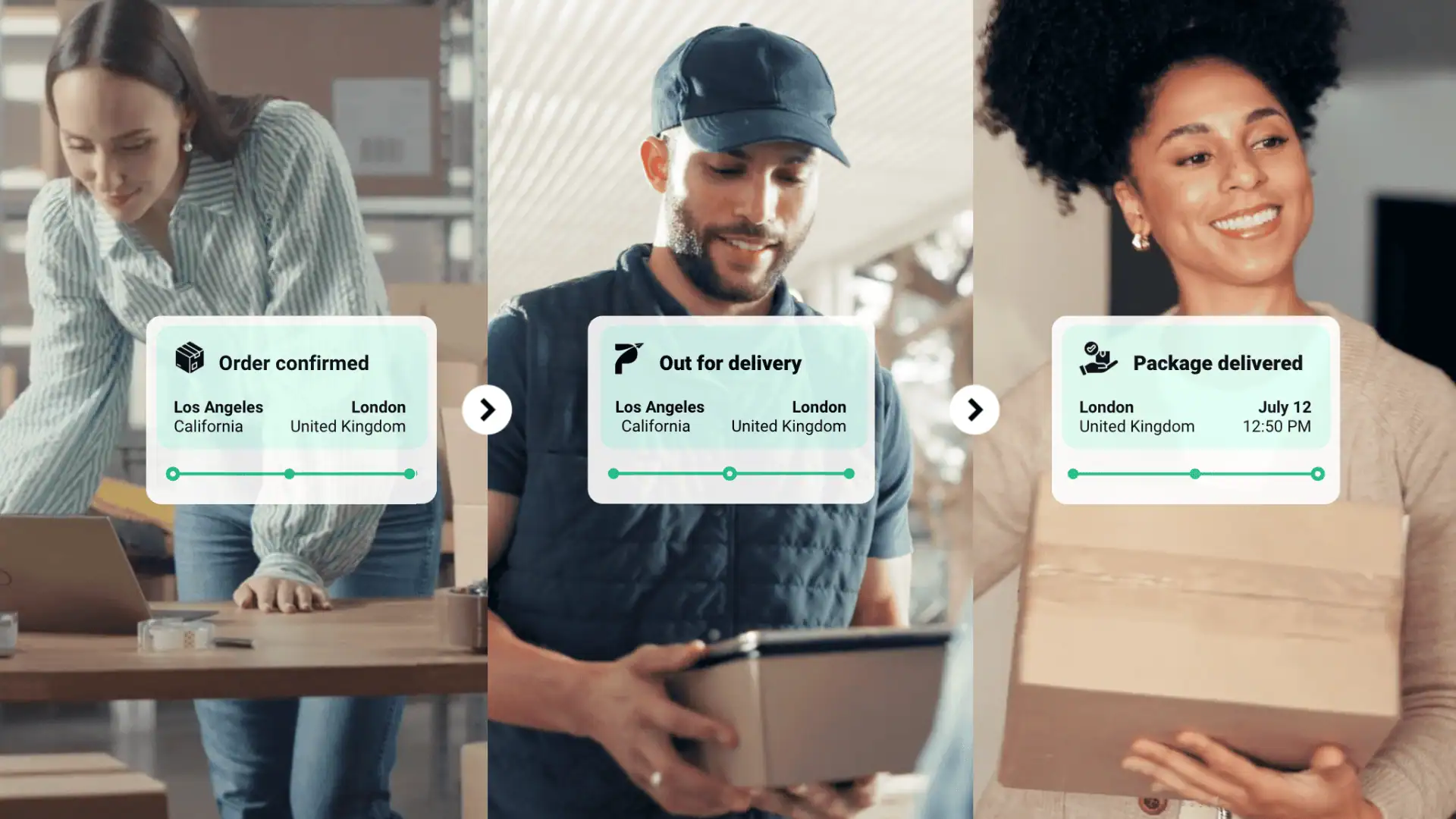



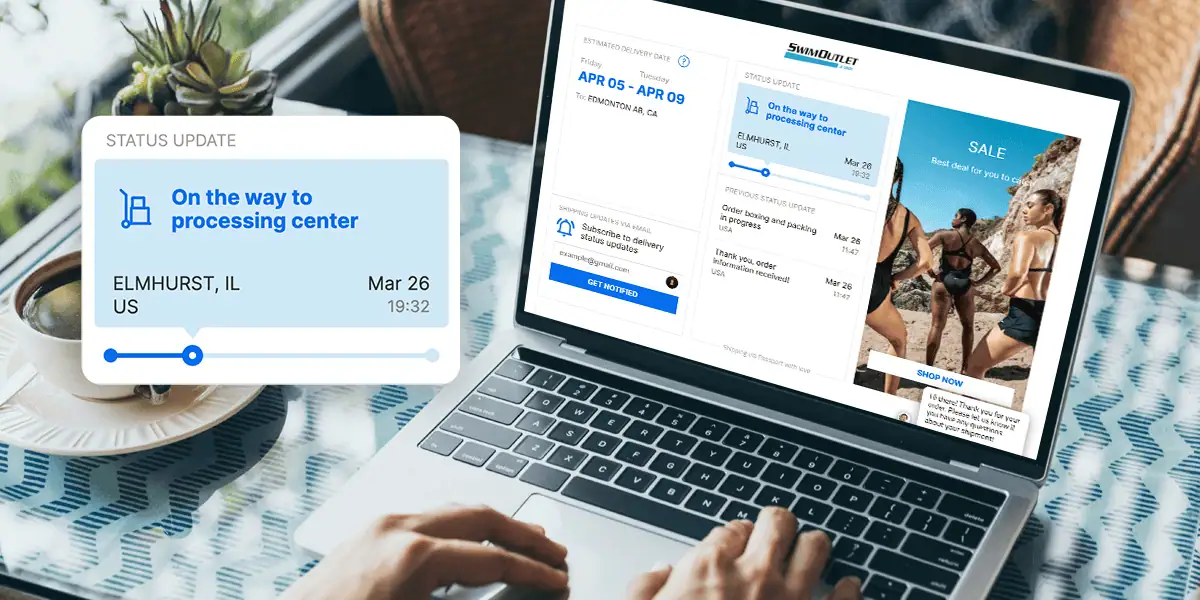
For ecommerce brands selling internationally, shipping costs are only one part of the customer experience. Duties, taxes, customs clearance, and unexpected delivery fees can quickly turn a seamless order into a frustrating one.
That’s why many global merchants choose DDP shipping.
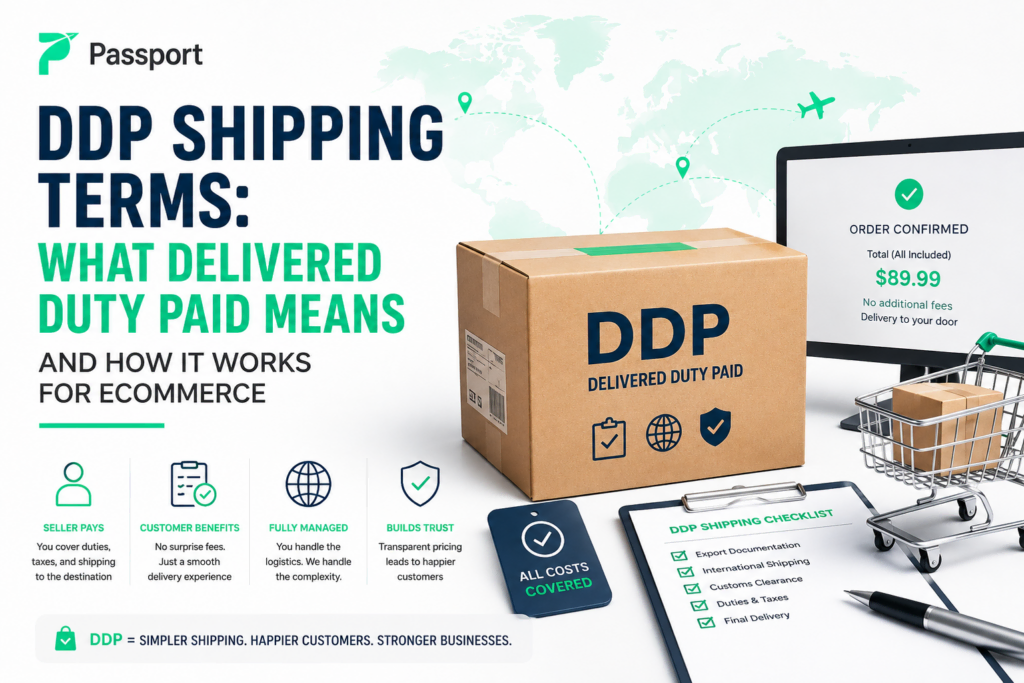
DDP shipping terms — short for Delivered Duty Paid — are designed to simplify international delivery by making the seller responsible for nearly every cost associated with shipping goods across borders. Instead of customers paying import fees at delivery, brands handle duties, taxes, customs processing, and shipping upfront.
For ecommerce businesses, this creates a more transparent checkout experience, fewer delivery surprises, and stronger customer trust.
What Is Delivered Duty Paid (DDP)?
Delivered Duty Paid (DDP) originates as a commercial freight Incoterm defined by the ICC, but in cross-border e-commerce, it functions primarily as a carrier billing term.
Under DDP shipping terms, the seller assumes responsibility for almost every part of the shipment until it reaches the buyer’s destination. That includes:
- Export documentation
- International transportation
- Customs clearance
- Import duties and taxes
- Final delivery costs
In simple terms, delivered duty paid means that the customer receives their package without needing to pay additional import fees when it arrives.
The seller handles the logistics and costs upfront.
For ecommerce brands, this model can significantly improve the post-purchase experience because customers know the total landed cost before placing an order.
Who Is Responsible for Customs Compliance Under DDP?
One of the most common misconceptions about DDP shipping is that it simply means the seller pays duties and taxes.
In reality, DDP also places significant customs compliance responsibilities on the seller.
Under delivered duty paid shipping terms, the seller is generally responsible for ensuring shipments meet the destination country’s import requirements, customs documentation standards, and regulatory obligations. Depending on the market, this may include providing accurate product classifications, country-of-origin information, customs values, and other import data required for clearance.
For ecommerce brands, this means DDP is not simply a pricing strategy. It is a compliance strategy.
As international order volume grows, brands often need stronger customs processes, data management practices, and technology infrastructure to support DDP shipping at scale.
Does DDP Include VAT?
In many markets, DDP shipping includes both import duties and import taxes, but the exact treatment varies by country.
For example, when shipping into the European Union, imported goods are typically subject to both customs duties and VAT. Under a DDP model, brands generally seek to collect these costs upfront so customers are not surprised by additional charges at delivery.
This distinction is important because duties and taxes are not the same thing.
Customs duties are typically based on factors such as product classification, country of origin, and customs value. VAT is a consumption tax applied according to the destination country’s tax rules.
For ecommerce brands, understanding both components is essential when calculating landed costs and building an effective DDP strategy.
How to Calculate DDP Shipping Costs
Calculating DDP shipping costs requires more than simply estimating freight charges.
To determine the total landed cost of an international order, brands typically account for:
- Product value
- International shipping costs
- Customs duties
- VAT, GST, or other import taxes
- Customs brokerage fees
- Clearance and handling fees
The exact cost structure varies based on the product, destination country, shipment value, and applicable customs regulations.
Because these variables can change across markets, many ecommerce brands use landed-cost technology and cross-border shipping platforms to calculate DDP costs more accurately at checkout.
The goal is to provide customers with a single, transparent price while protecting margins and reducing the risk of unexpected import expenses.
Why DDP Shipping Varies by Country
Not all countries handle imports the same way.
Although DDP shipping mimics the financial cost-split of the traditional freight Incoterm, the practical requirements can vary significantly depending on the destination market.
Countries may differ in:
- Duty rates
- VAT or GST requirements
- Customs documentation rules
- Product compliance regulations
- Importer requirements
- Clearance procedures
For example, the European Union applies VAT on most imported goods and maintains a common customs framework across member states. The United Kingdom, while geographically close to the EU, operates under a separate customs and VAT regime following Brexit.
In Canada, imported goods may be subject to GST, HST, or PST depending on the province, while Australia has its own GST requirements and import thresholds for low-value ecommerce shipments.
Some markets may also impose additional product-specific regulations. Beauty products, electronics, supplements, and children’s goods often face different compliance requirements depending on the destination country.
As brands expand internationally, understanding these regional differences becomes increasingly important for maintaining a predictable customer experience and avoiding customs-related disruptions.
2026 Update: Why DDP Shipping Matters More Under New EU Import Rules
As of July 1, 2026, the European Union implemented major changes to how ecommerce imports are handled.
As part of the reform, the EU eliminated the €150 duty de minimis exemption that previously allowed many low-value shipments to enter with reduced duty exposure. New customs duties, handling fees, and reporting requirements are expected to increase the complexity of cross-border ecommerce imports into Europe.
For brands shipping internationally, these changes make landed-cost visibility increasingly important.
As import costs become more layered, customers may become less tolerant of unexpected fees appearing after checkout or at delivery. This is one reason many ecommerce brands are evaluating DDP shipping models that allow duties, taxes, and related import costs to be calculated and collected upfront.
The changes also reinforce the importance of customs data quality, including:
- Accurate HS code classification
- Country-of-origin information
- Landed-cost calculation
- VAT compliance processes
For brands selling into Europe, DDP shipping is increasingly tied not only to customer experience, but also to broader compliance and operational readiness.
For a deeper breakdown of the upcoming changes, read our guide to the EU Customs Changes Reform and our overview of EU VAT compliance for ecommerce brands shipping B2C orders into Europe.
Common DDP Shipping Challenges
While DDP shipping can create a smoother customer experience, it also introduces operational complexity.
Common challenges include:
- Accurately estimating duties and taxes before checkout
- Maintaining correct HS code classifications
- Managing country-of-origin data across product catalogs
- Complying with destination-country customs requirements
- Handling regulatory changes that affect import costs
- Coordinating with carriers and customs brokers
Even small errors in customs data can lead to shipment delays, unexpected charges, or clearance issues.
For brands shipping internationally at scale, DDP success depends heavily on the quality of customs data and landed-cost calculations behind the scenes.
Why Ecommerce Brands Use DDP Shipping
International ecommerce customers expect the same convenience they receive from domestic shopping experiences.
Unexpected customs charges can create friction that leads to:
- Cart abandonment
- Refused deliveries
- Negative reviews
- Increased support tickets
- Lost repeat purchases
DDP shipping helps eliminate these issues by making costs more predictable and transparent.
Better Customer Experience
One of the biggest advantages of delivered duty paid shipping is clarity. Customers see the full cost upfront instead of discovering additional fees after the package arrives. This reduces confusion and improves trust.
Higher International Conversion Rates
Transparent pricing often leads to stronger conversion rates in cross-border ecommerce. When shoppers know exactly what they’ll pay, they’re more likely to complete a purchase.
Fewer Delivery Refusals
Customers sometimes refuse packages when unexpected duties are charged at the door.
Because DDP shipping includes duties and taxes in advance, refusal rates tend to decrease.
Improved Brand Perception
A smooth international delivery experience helps ecommerce brands compete globally.For many customers, receiving an order without customs complications feels faster, easier, and more premium.
DDP Shipping vs. DDU Shipping
DDP is often compared with DDU shipping, the key difference comes down to who pays duties and taxes.
DDP is often compared with DAP (Delivered At Place)—frequently referred to by carriers by its legacy billing code, DDU (Delivered Duty Unpaid).
This can create unexpected costs and delays.
Under DDP shipping terms, the seller handles these fees in advance.
For ecommerce brands focused on customer experience, DDP is often the preferred option.
For more information read our DDP vs. DDU guide.
When Should Brands Use DDP Shipping?
DDP shipping is often a strong fit for ecommerce brands that:
- Sell internationally at scale
- Want to improve conversion rates
- Prioritize customer experience
- Serve markets with high import duties
- Want more predictable delivery outcomes
It can be particularly valuable for direct-to-consumer (DTC) brands where customer satisfaction and repeat purchases are closely tied to the delivery experience.
However, some businesses may choose alternative shipping models depending on:
- Product margins
- Operational complexity
- Shipping volume
- Regional regulations
The right approach depends on a brand’s international growth strategy.
How Passport Helps Brands Manage DDP Shipping
Offering a DDP shipping experience is often easier in theory than in practice.
To successfully ship DDP, brands need accurate customs data, reliable landed-cost calculations, tax and duty management, and operational workflows that scale across multiple international markets.
Passport helps ecommerce brands simplify cross-border shipping by supporting:
- Landed-cost calculation and duty estimation
- DDP-ready checkout experiences
- Customs data management, including HS codes and country-of-origin information
- International tax and compliance workflows
- Cross-border logistics operations across key global markets
Whether you’re expanding into Europe, Canada, Australia, the United Kingdom, or multiple markets simultaneously, Passport helps make international shipping more transparent for both brands and customers.
To learn how Passport can support your cross-border growth strategy, contact our team.
Frequently Asked Questions
What does DDP stand for in ecommerce?
DDP stands for Delivered Duty Paid. While it is derived from an ICC Incoterm, in the DTC parcel world, it is a carrier billing term denoting that the merchant pays all import fees upfront.
What does delivered duty paid mean?
Delivered duty paid means the seller pays the costs associated with importing goods into the destination country, including duties, taxes, and customs-related charges. The customer receives the shipment without paying additional import fees at delivery.
Does DDP include duties and taxes?
In most cases, yes. Under a DDP shipping model, the seller is responsible for paying applicable import duties, taxes, and customs charges before delivery. However, the exact requirements may vary depending on the destination country and shipment type.
Does DDP include VAT?
Often, yes. In markets such as the European Union, DDP shipments typically account for both customs duties and VAT. Because VAT rules vary by country, brands should ensure they understand local tax obligations when implementing a DDP strategy.
Who pays customs duties under DDP shipping terms?
Under DDP shipping terms, the seller is responsible for paying customs duties and import-related charges. This differs from DAP or DDU-style arrangements, where the buyer is responsible for paying import fees after the shipment arrives.
Who is responsible for customs clearance under DDP?
The seller is generally responsible for customs clearance and for providing the documentation required to import goods into the destination country. This may include product classifications, country-of-origin information, customs values, and other compliance-related data.
How are DDP shipping costs calculated?
DDP shipping costs typically include the product value, international freight, customs duties, VAT or GST, brokerage fees, clearance fees, and other import-related charges. Together, these costs make up the shipment’s total landed cost.
What is the difference between DDP and DDU?
Under DDP, the seller pays duties and taxes before delivery. Under DAP (Delivered at Place)—still widely stamped on carrier invoices under the legacy billing term DDU—the consumer is responsible for paying import duties, taxes, and customs-related fees when the shipment arrives in the destination country.
Why do ecommerce brands use DDP shipping?
Many ecommerce brands use DDP shipping to create a more transparent customer experience. By collecting duties and taxes upfront, brands can reduce surprise fees, minimize delivery refusals, improve conversion rates, and create a smoother post-purchase experience.
How do the EU’s 2026 import reforms affect DDP shipping?
As of July 1, 2026, the European Union removed the €150 duty de minimis exemption for low-value imports. As new duties, fees, and reporting requirements are introduced, many brands are evaluating DDP shipping strategies to provide greater landed-cost transparency and reduce customer friction.
Is DDP shipping better for customers?
For many cross-border ecommerce purchases, yes. DDP shipping provides customers with a more predictable checkout and delivery experience because duties and taxes are accounted for before the order ships, reducing the likelihood of unexpected charges at delivery.
When should brands use DDP shipping?
DDP shipping is often a good fit for brands that sell internationally, prioritize customer experience, and want more predictable delivery outcomes. It is particularly common among direct-to-consumer brands seeking to reduce friction in cross-border ecommerce.

Authored by Thomas Taggart
Head of Global Trade | Passport
Thomas Taggart is a cross-border commerce leader with more than 20 years of experience in international shipping and regulatory affairs. As the Head of Global Trade, Thomas helps ecommerce brands go global by simplifying international trade, tax, and product compliance issues. Prior to Passport, he brought international shipping solutions to market through multiple roles in UPS’s product development organization.