




For years, Delivered Duty Unpaid shipping has been a common option for ecommerce brands selling internationally. It allowed merchants to ship cross-border orders without collecting duties and taxes at checkout, leaving the customer to pay import charges upon delivery.
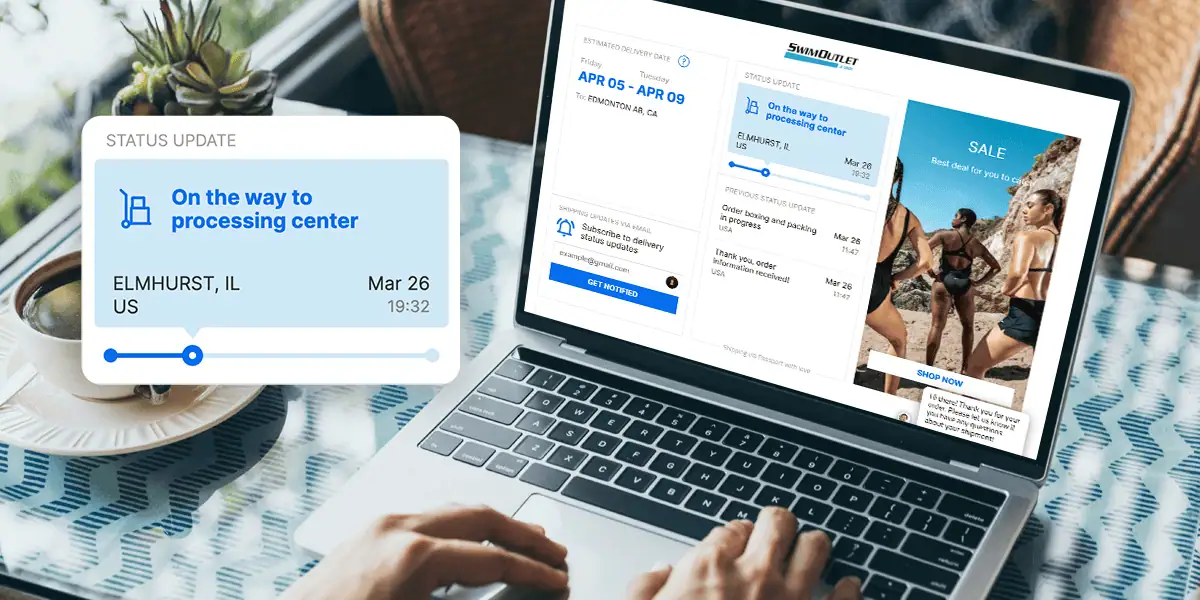
That model has always carried customer experience risk. A shopper may complete checkout believing they have paid the full cost of the order, only to receive a carrier notification asking for additional duties, VAT, brokerage fees, or handling charges before the package can be delivered.
In 2026, that risk is becoming more significant for brands shipping into the European Union.
As of July 1, 2026, the European Union eliminated the €150 duty de minimis threshold for low-value imports. Low-value ecommerce shipments that were previously exempt from customs are now subject to a new interim €3 flat-rate customs duty per customs declaration line item. A separate €2 customs handling fee is also expected no later than November 1, 2026.
At the same time, DDU shipping into the EU is becoming more fragmented country by country. Some markets are continuing to allow DDU delivery, while others have already been shut off or remain uncertain.
For ecommerce brands using DDU shipping into the EU in 2026, the issue is no longer only about surprise costs at delivery. It is also about shipment acceptance, customs liability, data accuracy, delivery consistency, and whether the carrier or postal operator can support the required clearance process.
What DDU Actually Is (and Why the Terminology Is Still Confusing)
DDU stands for Delivered Duty Unpaid. In practical ecommerce terms, it means the seller ships the goods to the destination country, but the customer is responsible for paying import duties, taxes, and any applicable clearance or brokerage fees before delivery.
Technically, DDU is no longer an official Incoterm. It was removed when the International Chamber of Commerce updated the Incoterms rules in 2010 and was largely replaced by DAP, or Delivered at Place.
However, the term DDU is still widely used across ecommerce, carrier billing, logistics workflows, and merchant operations. When ecommerce teams say “DDU,” they usually mean a shipment where duties and taxes are not collected at checkout and are instead passed to the customer at or before delivery.
That is the model brands need to reevaluate.
Contrast this with DDP — Delivered Duty Paid — where the merchant assumes full responsibility for duties and taxes, collects them at checkout, and delivers a fully landed-cost experience to the customer’s door.
For a full side-by-side comparison, see Passport’s DDP vs. DDU guide.
Why DDU Has Always Created Customer Experience Risk
According to Baymard Institute’s research, 48% of online shoppers abandon their carts when they encounter unexpected additional costs — and surprise duties at the door are one of the fastest ways to trigger it.
For example, when a customer pays $60 at checkout and then receives a carrier notification asking them to pay $12 in import duties before delivery, several things happen in rapid sequence. Some customers pay and are frustrated. Others refuse the package. Others simply never buy from that brand again.
Each refused package costs the brand the product, the original shipping cost, and often the return shipping cost on top of the lost customer.
This is why Passport’s landed cost guide recommends modeling the full cost to the customer, including duties, VAT, and any carrier handling fees.
The Operational Cost of DDU
DDU creates a cascade of downstream operational problems:
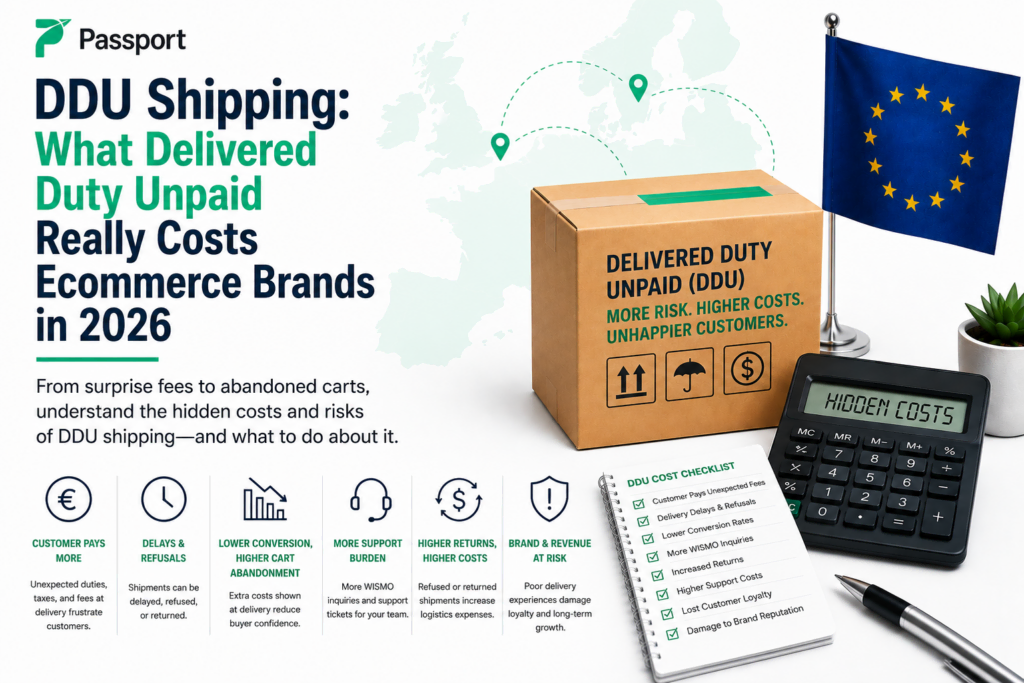
Refused packages trigger return-to-sender flows, which are expensive and slow. Customers who do pay often contact support asking why they owed more than expected at checkout, driving up support ticket volume. Brokerage and handling fees charged by carriers to the customer are often higher than the duty itself, amplifying the surprise. Multi-SKU orders become particularly messy when only one item triggers a duty obligation but the entire parcel is held.
In 2026, those long-standing issues are being compounded by a changing EU customs environment and uneven market-level support for DDU delivery.
What Changes in the EU as of July 1, 2026
DDU shipping remains possible in some EU markets, but availability is changing country by country.
Current DDU Status by Country
The Danger of “Per-Item” Classifications
Critically, the €3 duty is not a flat fee per parcel. It is assessed per declaration line based on the product’s Harmonized System, or HS, tariff classification.
For example, if a parcel contains two identical t-shirts, they share one HS code and trigger a single €3 charge. However, a parcel containing a smartphone, a charger, and a set of earphones may fall under three distinct tariff headings, resulting in a €9 duty bill. Authorities indicate that this €3 duty will likely be added to the customs value before import VAT is calculated, meaning VAT is charged on the higher combined total.
For customers receiving DDU parcels, that means the amount due at delivery may become more difficult to predict and easier to misunderstand.
What Is DDU shipping with IOSS?
As more brands recognized the customer experience risks of traditional DDU — customers surprised at the door, refused packages, lost repeat buyers — some looked for a middle path. The idea was to collect duties, taxes and customs fees at checkout, as in DDP, but ship through postal networks that operate under DDU-style billing at customs.
In theory, the customer pays upfront, the parcel moves as DDU, and everyone is happy.
In practice, it creates a structural mismatch: the merchant collects duties from the customer at checkout, but the parcel arrives at customs without a designated liable party to pay those duties to the customs authority. The money was collected. The mechanism to remit it is not in place.
Hybrid DDU can also refer to a shipment that combines elements of both DDU and IOSS-enabled clearance. In practice, this can happen when a merchant ships a parcel under a DDU model but includes an IOSS number in the electronic customs data.
The problem is that these signals can conflict.
DDU suggests the customer will be responsible for duties and taxes at or before delivery. IOSS data suggests that VAT has been accounted for under the Import One-Stop Shop process. Under the new EU framework, this can create confusion around who is responsible for the applicable customs charges and whether the shipment is being declared under the correct process.
Many EU countries have indicated that they will no longer accept DDU shipments where an IOSS number is included in the electronic data. These shipments are commonly referred to as Hybrid DDU shipments.
For merchants, the practical takeaway is straightforward: including IOSS data on a DDU shipment may increase the risk of rejection by the destination postal operator.
For the full picture of EU customs changes and how they affect ecommerce operations, see Passport’s EU Customs Reform 2026 guide and The EU’s €3 Flat Duty Is Live. Here’s What Counts as Avoidance — and What Doesn’t.
How Passport Can Help
Passport helps ecommerce brands move from DDU to a genuine DDP model — without the operational complexity of managing EU customs declarations, IOSS registrations, duty remittances, and carrier-specific compliance requirements in-house.
Passport’s Seller of Record solution handles the EU customs liability that hybrid DDU cannot, while compliance services covers the VAT and import tax registration brands need to operate compliantly across EU member states. The result: customers see a clean, complete landed cost at checkout, parcels clear customs without ambiguity, and brands avoid the refused deliveries and support escalations that DDU increasingly creates.
Talk to Passport about reviewing your shipping model.

Authored by Thomas Taggart
Head of Global Trade | Passport
Thomas Taggart is a cross-border commerce leader with more than 20 years of experience in international shipping and regulatory affairs. As the Head of Global Trade, Thomas helps ecommerce brands go global by simplifying international trade, tax, and product compliance issues. Prior to Passport, he brought international shipping solutions to market through multiple roles in UPS’s product development organization.
Frequently Asked Questions
What is DDU shipping?
DDU (Delivered Duty Unpaid) is a shipping model where the seller is responsible for delivering goods to the destination country but the customer is responsible for paying import duties, taxes, and brokerage fees upon or before delivery. DDU was replaced by Delivered-at-Place (DAP) as an official Incoterm by the International Chamber of Commerce in 2010. Despite this, DDU is still widely used in carrier billing and ecommerce platforms.
What is the difference between DDU and DDP?
Under DDU (or DAP), the customer pays duties and taxes at the door. Under DDP, the merchant collects duties and taxes at checkout and delivers a fully landed-cost experience. DDP eliminates surprise charges at delivery; DDU does not.
Is DDU still a valid Incoterm?
DDU is not included in Incoterms 2010 or Incoterms 2020, which is the most recent edition of the International Chamber of Commerce’s Incoterms. The current closest equivalent is Delivered-at-Place (DAP). However, DDU continues to appear in carrier billing, platform settings, and ecommerce contracts.
What happens to DDU shipments to the EU after July 1, 2026?
As of July 1, 2026, the EU will apply a flat-rate €3 customs duty per item type on parcels valued under €150, ending the duty-free treatment that previously applied to low-value shipments. An additional €2 handling fee per line item is also expected no later than November 1, 2026. Under DDU, these charges fall on the customer at delivery — increasing the surprise bill and the likelihood of refused packages.
Should I use DDP or DDU for EU shipments after July 2026?
For most DTC ecommerce brands, DDP is the clear answer after July 1, 2026. The combination of the new €3 per-item duty, the forthcoming €2 handling fee, and the structural breakdown of hybrid DDU through postal networks makes DDU significantly more expensive for customers and more operationally risky for brands. See Passport’s DDP vs. DDU guide for a full framework, and contact Passport to evaluate your EU shipping strategy.
Is DDU shipping still available in Germany?
Yes. Germany will continue allowing DDU shipments through August, 31, 2026. Passport is not shutting off DDU delivery into Germany at this time. However, due to continued market uncertainty, DDU parcels into Germany may face increased risk of delays and/or delivery issues. Passport strongly recommends switching to DDP for Germany to reduce disruption risk.
Is DDU shipping still available in Denmark?
Yes. Denmark is now expected to continue accepting DDU delivery after July 1, 2026. Passport has re-enabled DDU delivery into Denmark, effective July 1 at 12 PM EST.
Is DDU shipping still available in Luxembourg?
No. Luxembourg was proactively shut off for DDU delivery on June 24, 2026, as previously communicated.
What is Postal DDP shipping?
Postal DDP shipping is a shipping model where a brand collects duties or taxes at checkout, as in DDP, but routes the parcel through a postal or carrier network that may still present the shipment as DDU at customs.
What is DDU shipping with IOSS?
DDU shipping with IOSS refers to a shipment that moves under a DDU model while also including an IOSS number in the electronic customs data. DDU indicates that the recipient may be responsible for import charges at or before delivery, while the IOSS number indicates that import VAT has already been collected and will be reported through the Import One-Stop Shop.
Because these signals can conflict, some EU postal operators may reject or return DDU shipments that include IOSS data. Merchants using DDU should ensure that an IOSS number is not transmitted unless the shipment is moving through a properly supported IOSS clearance process.
Why are EU postal operators rejecting DDU shipments with IOSS?
Some EU postal operators are rejecting DDU with IOSS because it can create a mismatch between what was collected from the customer and who is legally responsible for remitting duties or taxes to customs authorities. DDU shipments that include IOSS data may also create conflicting customs signals, increasing the risk of rejection or return.
Where can I monitor EU customs changes as they happen?
Passport’s EU customs developments tracker is updated as new guidance is issued. The EU’s €3 Flat Duty Is Live. Here’s What Counts as Avoidance — and What Doesn’t and the EU import tariff rates article provides product-level duty context for brands modeling landed cost.